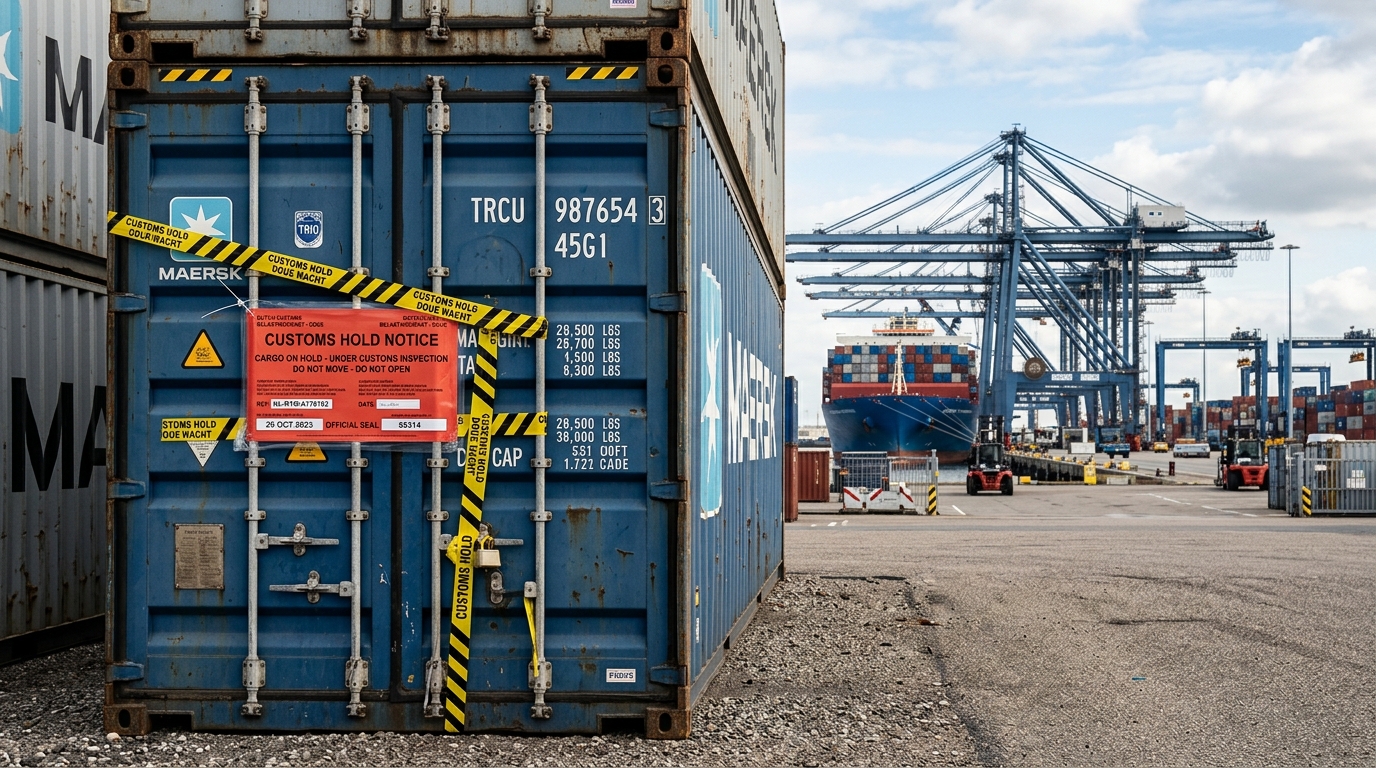
A customs hold at the Port of Long Beach stops your container cold. Demurrage begins accruing. Your delivery appointment falls apart. And without a clear picture of what happens next — and who’s responsible for what — a two-day hold can become a five-day hold with a bill to match.
This guide covers how CBP flags containers for examination at POLB, what each exam type actually involves, the step-by-step process from notification to release, and the practical steps shippers and their drayage partners can take to manage costs and move cargo as quickly as possible once a hold is issued.
For help moving a container that’s been cleared after a customs hold, contact Precision Worldwide Logistics at (714) 690-9344.
Why CBP Flags Containers at the Port of Long Beach
The Port of Long Beach handles roughly 9 million twenty-foot equivalent units (TEUs) annually — a volume that makes manual review of every shipment impossible. U.S. Customs and Border Protection uses a risk-based scoring system called the Automated Targeting System (ATS) to evaluate every inbound container before it arrives at the terminal.
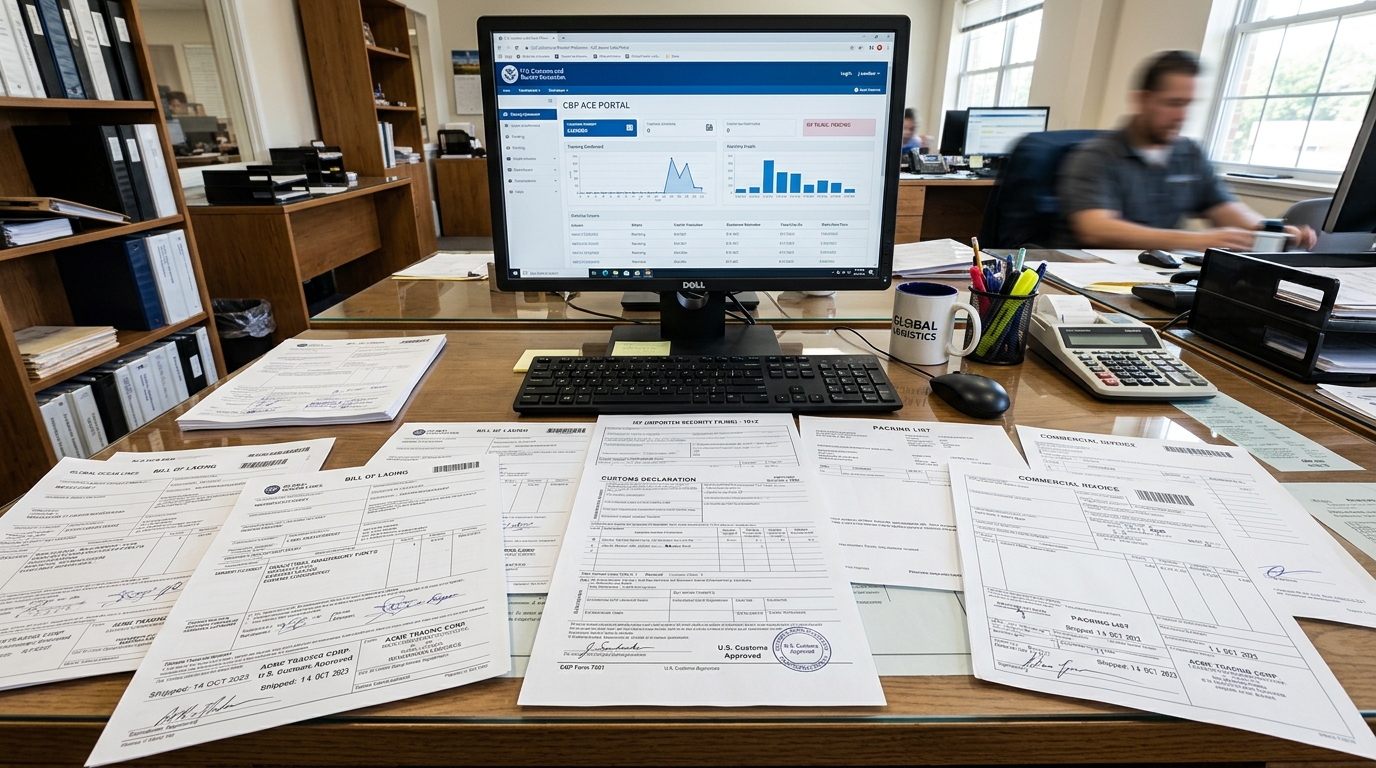
ATS cross-references the cargo manifest, the importer’s entry filing (submitted through ACE — Automated Commercial Environment), the Importer Security Filing (ISF, or “10+2”), and intelligence databases to generate a risk score for each shipment. The specific scoring criteria are not published, but CBP has identified the following as common contributing factors:
Targeting and risk factors that elevate a container’s score:
- ISF filing errors or late submission — The ISF must be filed at least 24 hours before vessel departure from a foreign port. Late or incomplete filings are one of the most consistent triggers for additional scrutiny.
- Country of origin concerns — Shipments from certain origins receive higher baseline scrutiny, particularly where anti-dumping or countervailing duty (AD/CVD) orders are in effect.
- Inconsistencies across documents — Mismatches between the commercial invoice, packing list, bill of lading, and entry filing draw ATS flags. This includes discrepancies in consignee name, shipper details, product descriptions, weight, or quantity.
- HTS code anomalies — If the declared Harmonized Tariff Schedule code appears inconsistent with the product description, or if similar shipments from the same supplier have been classified differently, the entry becomes a candidate for review.
- Importer history — First-time importers and companies with prior compliance issues or penalty actions receive elevated scrutiny. Established importers with clean records benefit from that history.
- Random selection — CBP uses randomized selection as a check on risk-based targeting. Even shipments with clean documentation and established importer history can be flagged.
- Partner Government Agency (PGA) holds — The FDA, USDA, EPA, FCC, and other agencies can independently issue holds on shipments within their regulatory scope. A food-grade ingredient may trigger an FDA hold independent of any CBP action.
It’s important to understand that a customs hold is not an accusation of wrongdoing. Many holds resolve quickly once documentation is reviewed or the container passes a scan. The problem for shippers is not the exam itself — it’s the clock that starts running the moment the hold is issued.
Types of Customs Exams at Port of Long Beach
CBP conducts three main types of physical exams at POLB, escalating in cost, duration, and disruption. Each serves a different purpose and is ordered at CBP’s discretion.
VACIS Exam (Non-Intrusive Inspection / X-Ray)
A VACIS exam — Vehicle and Cargo Inspection System — is the least disruptive exam type. The container is driven through a large-format X-ray machine at the terminal, and CBP reviews the resulting images. If the image is consistent with the declared cargo and nothing anomalous is detected, the container is typically released without further examination.
VACIS exams generally add one to three days to transit time, depending on terminal congestion and CBP staffing. Exam fees are billed to the importer — contact your customs broker for current fee schedules.
If the VACIS image raises questions, CBP escalates to a physical exam.
Tailgate Exam
A tailgate exam — also called a pier examination — is a physical inspection conducted at the terminal. A CBP officer breaks the container seal, opens the doors, and visually inspects the cargo load. The officer is looking for undeclared goods, cargo that doesn’t match the manifest, and any security concerns.
The tailgate exam does not require the container to leave the terminal. It is faster than an intensive exam but more disruptive than a VACIS scan. Timeline adds two to four days in most cases. Costs are comparable to VACIS exams, but the container remains on terminal during the hold, meaning demurrage continues accumulating.
If the tailgate inspection raises further concerns, CBP orders an intensive exam.
CET / Intensive Exam (Stuffing Exam)
The Comprehensive Examination Test — commonly called an intensive exam, CET, or stuffing exam — is the most disruptive examination type. Unlike the tailgate exam, an intensive exam requires the container to be physically transported off the terminal to a Centralized Examination Station (CES).
At the CES, the container is fully unloaded, cargo is separated and opened, and CBP officers inspect the contents in detail. Once the exam is complete and CBP is satisfied, the cargo is repacked, the container is resealed, and it returns to the terminal for release and delivery.
Intensive exams typically add five to seven business days to transit time, sometimes longer during high-volume periods. Costs are substantially higher — exam fees depend on labor involved, cargo type, container size, and the specific CES facility. Floor-loaded containers (unpalletized cargo) carry additional labor costs compared to palletized loads.
The Centralized Examination Station (CES) Process at Long Beach
The CES is a private facility contracted by CBP to prepare shipments for intensive examination. At the Port of Long Beach, CBP designates CES facilities in the port area to handle this work. The CES is responsible for transporting the container from the terminal, unloading it, staging the cargo for inspection, reloading after clearance, and returning the container to the terminal.
How the CES process works:
- CBP issues the intensive exam hold notice in the ACE portal.
- Your customs broker transmits the CES hold to the terminal and notifies the freight forwarder or importer.
- A carrier authorized for exam transfers is dispatched to move the container from the terminal to the CES facility. Note: the transport from terminal to CES is a separate operation coordinated by the CES facility or your customs broker — this is not the same as your delivery drayage.
- The CES facility unloads the container, organizes cargo for CBP inspection, and records content details.
- CBP officers conduct the physical exam at the CES.
- If cleared, the CES reloads the container, applies a new CBP seal, and coordinates return to the terminal.
- The terminal reflects the customs release in their system (typically 7512 paperwork is processed).
- Once all holds are lifted — including any PGA holds — the container is available for pickup by your delivery drayage carrier.
During this entire process, container demurrage is accruing at the terminal. The container is technically “at the terminal” for demurrage purposes even when it physically leaves for the CES, because it returns to the terminal before delivery. This is one of the most costly aspects of an intensive exam: the timeline extends well beyond the original free days, and every additional day compounds the bill.
Customs Hold Timeline — From Notification to Delivery
Understanding the sequence helps you respond quickly and minimize avoidable delays.
Day 0 — Hold Issued:
CBP places a hold in ACE. Your customs broker receives notification (electronically) and should inform you immediately. The hold status appears in the terminal’s system, blocking the container from outgate.
Days 1–2 — Documentation Response or Exam Scheduling:
If the hold is a document review (CBP requests additional documentation, such as proof of origin, invoices, or lab results for PGA holds), your customs broker assembles and submits the required information. For exam holds, CBP schedules the container for examination.
Days 2–4 — VACIS or Tailgate Exam (if applicable):
For non-intrusive or pier exams, the examination occurs within two to four days of the hold. If the result is clean, CBP issues the release and your broker gets the container green-lit in ACE.
Days 3–10 — CES Transport and Intensive Exam (if escalated):
For intensive exams, transport to the CES facility, unloading, CBP exam, reload, and return to terminal typically spans five to seven business days.
Release Day — All Holds Lifted:
CBP releases the entry in ACE. If there are PGA holds (FDA, USDA, etc.), those must clear independently before the container can outgate. Your customs broker confirms all holds are lifted across every agency before your drayage carrier is dispatched.
Delivery Day:
Your drayage carrier picks up the container with a valid terminal appointment and delivers to the consignee.
Cost Impact — Demurrage, Exam Fees, and CES Charges
A customs hold generates multiple cost streams simultaneously. Here is how the charges stack up:
Terminal Demurrage:
Demurrage is charged by the terminal (not the steamship line) for containers that remain at the port past the free time allotment. Free time at POLB terminals typically ranges from four to seven calendar days after vessel discharge, depending on the terminal and any steamship line tariff provisions. Once free time expires, demurrage charges start — and during a customs hold, the importer has no control over when the container moves.
Demurrage rates at Port of Long Beach terminals vary by operator and container size. At major POLB terminals, charges start accruing immediately and escalate with each passing day. A seven-day intensive exam that exhausts three days of free time leaves the importer paying four days of demurrage — a significant bill before exam fees are even factored in.
CES / Exam Fees:
Exam fees are the importer’s responsibility. For VACIS and tailgate exams, fees are relatively modest. For intensive exams at a CES facility, total costs including unload, reload, labor, and facility charges are substantially higher. Floor-loaded containers carry additional labor costs. Additional charges at some CES facilities include drayage to and from the CES (charged separately from your delivery drayage), chassis fees, and after-hours or weekend handling surcharges.
Detention / Per Diem:
Steamship lines charge detention (per diem) for containers that are not returned to the terminal within the allotted free days after outgate. This is a separate charge from demurrage. If the customs hold resolves, the container is dispatched, delivered, and the empty is returned promptly, you may avoid detention. But if exam delays push the total container dwell time beyond the steamship line’s free period, detention begins accumulating on top of demurrage.
Customs Broker Coordination Fees:
Your customs broker will charge for the additional work involved in managing an exam hold — communicating with CBP, providing additional documentation, coordinating CES scheduling, and monitoring release status. These fees vary by broker.
CES Transport vs. Delivery Drayage — Two Separate Moves
A customs hold introduces a logistical distinction that importers sometimes miss: the difference between the CES exam transport and the delivery drayage to the final destination.
CES exam transport:
Moving a container from a terminal to a CES facility for a CBP exam is a separate operation from your final delivery. The cargo has not been formally entered — duties have not been assessed, and the container is still under CBP control. This transport is typically coordinated by the CES facility itself or by your customs broker — not by your standard delivery drayage company.
Delivery drayage:
Once CBP releases the container — all holds lifted, entry processed, customs release confirmed — your delivery drayage carrier picks up from the terminal under a normal outgate. This is where Precision comes in. We coordinate the terminal appointment, dispatch a TWIC-cleared driver with appropriate equipment, and execute the delivery from the Port of Long Beach to your facility.
The two movements are sequential, not simultaneous. Do not dispatch your delivery drayage carrier until customs release is confirmed. Dispatching prematurely wastes appointment slots, ties up drivers, and generates unnecessary wait-time charges.
What Your Customs Broker Does vs. What Your Drayage Carrier Does
During a customs hold, two parties are active on your behalf — and their roles are distinct.
Your customs broker:
- Monitors the entry in ACE and receives hold notifications
- Identifies the type of hold (CBP exam, PGA hold, document review)
- Communicates with CBP and PGA agencies on your behalf
- Assembles and submits requested documentation
- Coordinates with the CES facility for exam scheduling
- Monitors and confirms release status across all relevant agencies
- Notifies you and your drayage carrier when the container is clear for pickup
Your drayage carrier:
- Monitors the terminal system for hold status and release confirmation
- Books a terminal appointment once customs release is confirmed
- Dispatches a driver to pick up the container from the terminal
- Executes delivery to the consignee
- Returns the empty container to the terminal within free time
The broker controls the release. The drayage carrier executes the delivery. Neither can do the other’s job. Communication between the two is critical — delays often occur when the customs broker confirms release in ACE but hasn’t explicitly notified the drayage carrier, who is waiting for confirmation before booking an appointment.
How to Minimize Delays and Costs During a Customs Hold
Once a hold is issued, the goal shifts to containment: move as fast as possible through the exam process, protect remaining free days, and coordinate release and delivery in a single efficient sequence.
Steps to take immediately after hold notification:
- Confirm hold type with your customs broker. A document-review hold and an intensive exam have completely different timelines and cost profiles. Know which you’re dealing with within the first few hours.
- Check remaining free days at the terminal. If free days are nearly exhausted, ask your terminal whether a hold dispute process can pause demurrage accrual during the exam. POLB terminals handle this inconsistently — your broker or drayage partner will know the current policy.
- Gather documentation pre-emptively. Don’t wait for CBP to request specific documents. Assemble your commercial invoice, packing list, bill of lading, ISF filing confirmation, and any applicable certificates (origin, phytosanitary, FDA prior notice) now. Fast document response is the single most controllable variable in exam resolution time.
- Confirm CES scheduling as soon as the intensive exam is ordered. CES facilities book appointments, and a backlog at the CES adds days the same way a terminal backlog does. Your customs broker should confirm the CES appointment date immediately.
- Alert your delivery drayage carrier. Let your carrier know a hold is active so they can pause appointment booking (saving you wasted appointment slots) and prepare for rapid dispatch the moment release is confirmed.
- Pre-clear all PGA holds in parallel. If an FDA hold exists alongside a CBP hold, work both simultaneously. PGA holds resolve on their own timeline — waiting for CBP release before addressing a PGA hold adds unnecessary days.
Tips for Reducing Customs Hold Frequency
No shipper can eliminate holds entirely — CBP’s random selection process means compliant shipments can still be flagged. But many holds are preventable, and the following practices meaningfully reduce exposure:
File ISF accurately and on time.
The ISF must be filed no later than 24 hours before the vessel departs the last foreign port. Late ISF filings increase ATS risk scores and can generate penalties of up to $5,000 per violation. Errors in consignee, supplier, or commodity information trigger document mismatches that CBP’s systems are designed to detect.
Use correct, specific HTS codes.
Vague product descriptions and incorrect classification are leading causes of holds. Work with a licensed customs broker to confirm HTS codes before shipment, particularly for new SKUs or commodities in categories with active AD/CVD orders.
Maintain document consistency across all records.
The commercial invoice, packing list, bill of lading, ISF, and formal entry must all use the same product descriptions, weights, quantities, and party names. Discrepancies — even minor ones — are among the most common CBP targeting triggers.
Consider C-TPAT participation.
CBP’s Customs-Trade Partnership Against Terrorism (C-TPAT) is a voluntary supply chain security program. C-TPAT certified importers receive reduced exam rates as a benefit of program membership, though participation does not guarantee exemption.
Build relationships with established trading partners.
Importers with long relationships with verified suppliers carry lower baseline risk profiles than importers using new, unverified sources. New supplier relationships, especially with origins in high-scrutiny countries, carry elevated exam probability.
Ready to Pick Up After Customs Clearance?
When your container clears customs, every hour matters. Remaining free days may be gone. Demurrage may already be accruing. The goal is to get from customs release to delivered consignee as quickly as possible.
Precision Worldwide Logistics, Inc. is an asset-based drayage company based in La Mirada, CA — approximately 20 minutes from the Port of Long Beach. We own our trucks and chassis, employ TWIC-cleared drivers, and have operated in the Long Beach port market for 35 years. When your customs broker confirms release, we’re ready to dispatch.
For more information about our customs-hold drayage service, see our customs hold drayage page and our full Long Beach drayage services overview.
Call (714) 690-9344 to discuss a post-customs-hold pickup — we’ll confirm equipment availability, book the terminal appointment, and give you a firm delivery window.
Frequently Asked Questions
How long does a customs hold take at the Port of Long Beach?
It depends on the exam type. A VACIS (X-ray) exam typically adds one to three days to transit time. A tailgate (pier) exam adds two to four days. An intensive exam requiring transport to a Centralized Examination Station (CES) typically adds five to seven business days — sometimes longer if CES appointment availability is limited or if parallel PGA holds (FDA, USDA) haven’t resolved. Document-review holds can resolve in one to two days if documentation is assembled and submitted quickly. None of these timelines are guaranteed; CBP workload, terminal congestion, and CES capacity all affect actual duration.
Who pays for customs exam fees at Port of Long Beach?
The importer of record is responsible for all customs examination costs, including the exam fee itself, CES facility charges, labor for unloading and reloading during an intensive exam, and drayage to and from the CES facility. These costs are separate from terminal demurrage, which also accrues during the hold period. VACIS and tailgate exam fees are relatively modest. Intensive exam costs are substantially higher, depending on cargo type, container size, and labor involved. Contact your customs broker for current fee estimates.
Does demurrage accrue during a customs hold?
Yes — terminal demurrage continues to accrue during a customs hold once free time is exhausted. The terminal does not automatically pause demurrage because CBP has issued a hold. In some cases, importers can dispute demurrage charges that accrued during an exam hold under FMC (Federal Maritime Commission) rules or terminal tariff provisions — the Ocean Shipping Reform Act of 2022 strengthened importers’ rights in this area — but disputing charges after the fact is far less desirable than preventing unnecessary accrual by moving quickly through the exam process.
What is the difference between a CBP hold and a PGA hold?
A CBP hold means U.S. Customs and Border Protection has flagged the container for exam or document review. A PGA (Partner Government Agency) hold is issued by a separate federal agency — the FDA, USDA, EPA, FCC, or others — with regulatory authority over the specific commodity. CBP and PGA holds can occur simultaneously, and both must be cleared before the container can outgate. PGA holds resolve on their own timelines independent of CBP. Your customs broker monitors all holds and coordinates response to each agency.
Who handles the transport from the terminal to the CES exam facility?
The CES exam transport — moving a container from the terminal to the exam facility — is typically coordinated by the CES facility itself or by your customs broker. This is a separate operation from your delivery drayage. Once CBP issues a full customs release and the container is available at the terminal, your standard drayage carrier handles the final delivery to your facility.
Precision Worldwide Logistics, Inc. | La Mirada, CA | (714) 690-9344
Asset-based drayage from Port of Long Beach — TWIC-cleared drivers, own chassis, 35 years at the port.