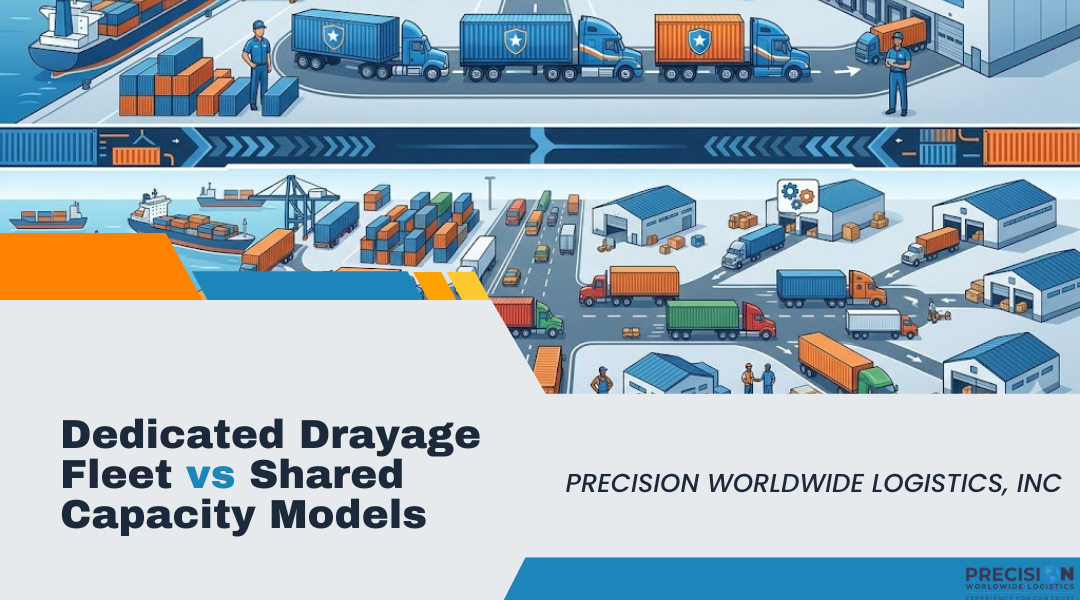
Choosing between a dedicated drayage fleet and shared capacity models shapes how efficiently your containers move from port to warehouse. Each model offers trade-offs that affect cost, reliability, and scalability. If your business values control, consistency, and on-time performance, a dedicated drayage fleet often delivers stronger operational stability than shared capacity arrangements.
You face a different set of decisions when balancing flexibility against fixed investment. Shared capacity can help manage variable volumes and reduce idle assets, while dedicated operations deliver tighter scheduling, brand control, and easier visibility over equipment and drivers. Understanding these structural differences prepares you to align your logistics model with actual demand patterns—not assumptions.
As Precision Worldwide Logistics, Inc. in La Mirada demonstrates, an asset-based approach can create lasting value through direct control and dependable service. Whether scaling to new markets or stabilizing drayage performance, your decision on fleet structure defines long-term cost efficiency, service reliability, and risk management across your supply chain.
Structural Differences in Drayage Operations
Operational design in drayage determines how assets, drivers, and capacity are used to meet container transport demands. Your decisions about fleet ownership, how capacity is shared, and how specialized equipment is managed will influence cost, flexibility, and service reliability.
Asset Ownership and Dispatch Control
In a dedicated fleet, you own or lease trucks and directly manage drivers and dispatch schedules. This setup gives you greater control over service quality, routing efficiency, and compliance with customer requirements. Dispatch decisions occur in real time under your authority, allowing tighter coordination between terminal operations and container pick-up or delivery windows.
A shared-capacity model, often using common carriers or independent owner-operators, distributes control among multiple entities. You tap into a larger network but sacrifice dispatch precision. Brokers or third-party logistics providers typically mediate workloads, creating added communication steps. While this approach reduces fixed costs, it can also produce variability in truck availability.
| Model Type | Ownership | Dispatch Control | Cost Structure |
|---|---|---|---|
| Dedicated Fleet | You or your company | Direct and centralized | Higher fixed, lower variable |
| Shared Capacity | Independent carriers | Distributed and broker-managed | Lower fixed, higher variable |
Capacity Pooling and Brokerage Dynamics
Shared logistics depend on capacity pooling where different shippers use the same trucking resources through brokerage or digital freight platforms. You benefit from flexible access to trucks but face potential delays due to competing priorities. Brokers balance container moves across clients, which helps maximize truck utilization but can reduce responsiveness during peak port congestion.
In contrast, a private or dedicated fleet isolates your operations from market fluctuations. You allocate capacity based on pre-set contracts or forecasted volumes. This stability provides predictable service but requires you to absorb idle time when demand dips.
Effective decision-making involves comparing utilization rates, detention time, and per-trip margins. A mixed approach sometimes works best, where a core dedicated fleet handles consistent base traffic, and shared capacity supplements seasonal peaks.
Equipment Allocation and Chassis Dependency
Containers, chassis, and tractors rarely move as a single owned set in shared models. Each unit may belong to different parties: shipping lines, leasing firms, or drayage operators. You must coordinate equipment interchange agreements and track chassis availability at depots and ports. Delays often occur when mismatched sizes or types restrict container movement.
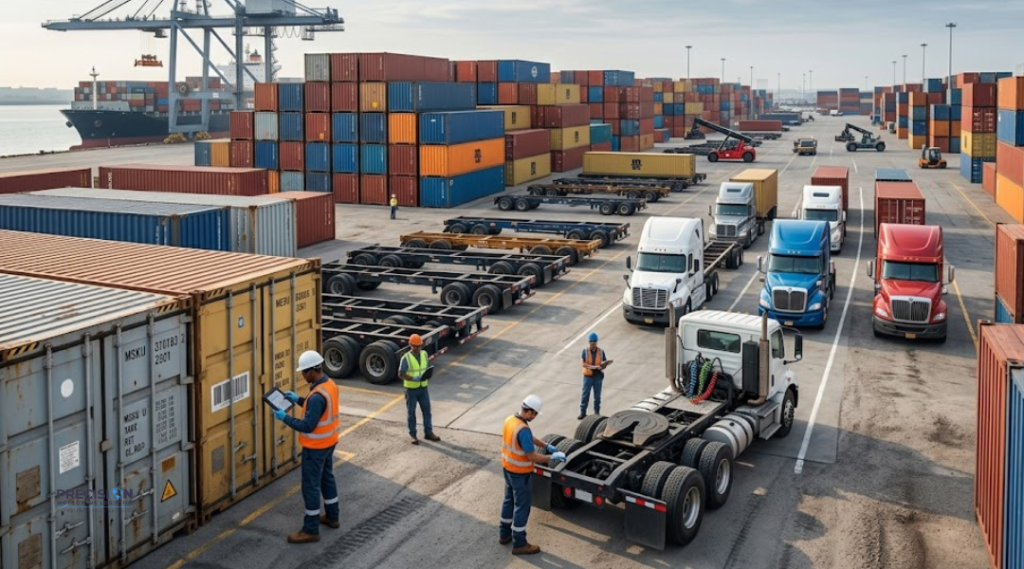
Dedicated fleets simplify this by controlling both trucks and chassis within a defined inventory. You can match container size (20- or 40-foot) with compatible chassis immediately, improving turnaround times. However, ownership raises maintenance and replacement costs.
Some operators reduce dependency through chassis pools—shared networks allowing temporary use under common operating rules. This arrangement improves overall asset use but requires careful scheduling and compliance oversight to prevent shortages or excess idle equipment.
Decision Frameworks for Managing Volatile Demand
Managing volatile demand in container drayage requires balancing network performance, cost structure, and service reliability under fluctuating conditions. You must weigh your need for consistent flow and predictable costs against the flexibility to adapt routing and capacity to real-time changes in demand.
Throughput Consistency Versus Utilization Efficiency
A dedicated fleet offers steady throughput when port or warehouse volumes fluctuate, ensuring you have the trucks needed each day. This consistency supports on-time delivery targets and smooth terminal operations, even when imports surge. However, keeping all assets active during slower periods can reduce asset utilization, driving up cost per mile.
A shared capacity model pools trucks across different shippers, improving utilization and lowering idle time. You gain efficiency from shared routing and network optimization, but during peak congestion you may compete for equipment. When volumes spike, carriers tend to favor higher-margin loads, which can limit your access to capacity.
| Model Type | Strength | Limitation |
|---|---|---|
| Dedicated Fleet | Predictable throughput and availability | Lower utilization efficiency |
| Shared Capacity | High asset efficiency through pooling | Less control over allocation in peak conditions |
Cost Predictability Versus Rate Exposure
Dedicated fleets give you predictable costs through fixed contracts. This simplifies budgeting and shields you from sudden market price swings in drayage rates or fuel. For stable, high-volume operations, predictable cost structures can improve long-term planning and enable tighter control of supply chain budgets.
In shared capacity models, rates often follow dynamic spot pricing based on regional demand and available trucks. This introduces rate exposure but can reduce cost during slack periods when market prices fall. Mixing strategic contracts with flexible spot-based drayage allows you to hedge against uncertainty while maintaining cost competitiveness across predictable lanes.
- Fixed-rate fleet → Reliable budgeting
- Dynamic-rate shared → Lower cost potential but higher volatility
Service Guarantees Versus Flexible Routing
Dedicated fleets can deliver guaranteed capacity and fixed service levels. You can define pickup windows and enforce delivery performance through consistent drivers familiar with your routes. This model also simplifies route planning and compliance requirements since vehicles and terminals remain within your control.
In contrast, a shared capacity system provides flexible routing that shifts trucks between customers based on real-time network demand. This flexibility supports rapid adaptation to volume shifts or port congestion through network optimization tools. However, it also dilutes direct control over scheduling and may reduce service reliability during periods of unexpected demand.
Both options serve different operational goals: guaranteed service suits stable, time-sensitive flows, while flexible routing fits variable and wide-reaching trade networks.
Evaluating Cost Structures, Control, and Risk Management
Managing drayage operations requires balancing cost predictability, service control, and exposure to operational risks. You must weigh how asset ownership, detention charges, and recovery speed affect both short-term expenses and long-term stability.
Fixed Asset Overhead Versus Variable Cost Structures
A dedicated fleet ties up capital in trucks, chassis, and maintenance. These assets create fixed costs regardless of use. You gain scheduling control and consistent driver availability, but you absorb idle time costs when volume drops. Insurance, equipment depreciation, and compliance add to your overhead.
In a shared capacity model, carriers or third parties absorb the asset investment. You pay per move or by contract rate, turning your expenses into variable costs. This flexibility helps when container volumes fluctuate, but it can expose you to market price swings and limited availability during peak demand.
When comparing both approaches, focus on cost-per-container over time. A sample comparison helps clarify trade-offs:
| Cost Component | Dedicated Fleet | Shared Capacity |
|---|---|---|
| Fixed Overhead | High | Low |
| Variable Rate | Moderate | High |
| Utilization Risk | High (idle costs) | Low |
| Control Level | Strong | Limited |
Your best fit depends on shipment volume stability and how much financial risk you can carry.
Detention and Demurrage Sensitivity
Delays at ports and terminals create detention and demurrage costs that increase total landed cost. In a dedicated model, you manage drivers and dispatch directly, giving you quicker responses to release containers and avoid penalties. However, inefficiencies in scheduling can still lead to idle equipment charges.
With shared capacity, your accessibility to drivers depends on carrier scheduling. That lack of control can extend container dwell times. Tracking visibility tools in your transportation management system (TMS) help offset this by alerting you before fees accumulate, but quick action still depends on the carrier’s responsiveness.
To manage these risks, establish agreed turnaround targets and penalty-sharing clauses. Monitor detention trends monthly to identify recurring choke points by terminal or consignee.
Disruption Handling and Recovery Speed
Port congestion, chassis shortages, and weather disruptions test uptime performance. A dedicated drayage fleet lets you reposition assets and reroute drivers faster when disruptions occur, reducing idle container time. Your in-house dispatching team can reassign loads within hours based on updated port data.
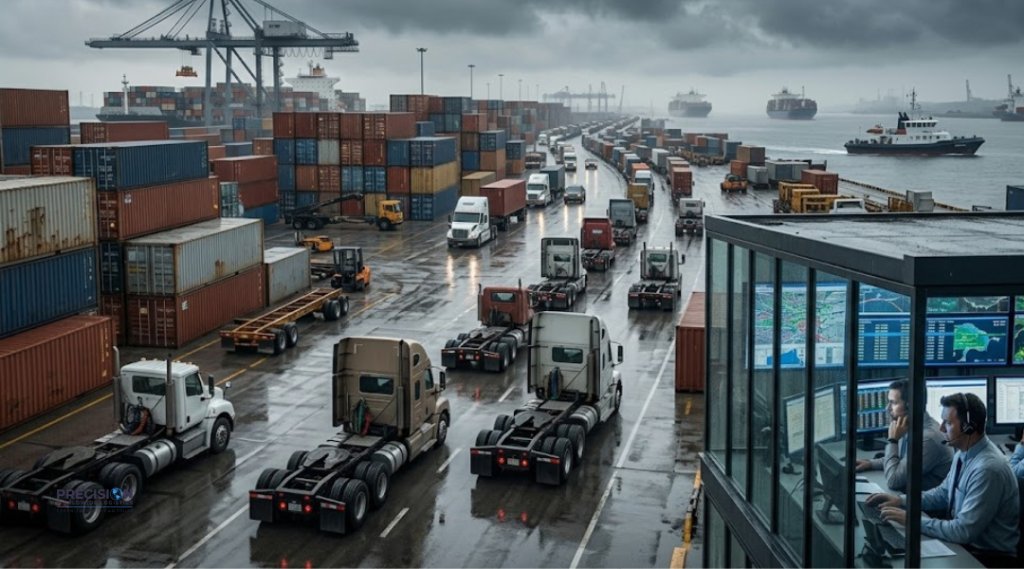
Shared capacity providers spread risk across their customer base. You may gain access to substitute trucks when your route stalls, but priority usually follows contractual or volume commitments. This can slow recovery in competitive markets or unexpected surges.
To strengthen recovery speed, keep alternate vendor agreements and use digital scheduling tools linked to your TMS. Real-time status updates improve coordination between terminals, carriers, and your warehouse network, helping you return to normal operations sooner after a disruption.
Asset-Based Drayage Considerations in La Mirada
When you choose an asset-based drayage provider in La Mirada, you work directly with a company that owns and operates its fleet of trucks, trailers, and chassis. This setup gives you more control, predictable schedules, and faster container movement from the Ports of Los Angeles and Long Beach.
Asset-based fleets often run 24/7 operations, manage their own drivers, and maintain their equipment. This helps reduce wait times, cut dwell fees, and improve delivery reliability between the port and inland facilities. Since the trucks and drivers are managed in-house, you also get clearer communication and accountability.
You may find this approach particularly valuable when shipping time-sensitive goods or managing high-volume container flows. La Mirada’s location—within about 25 miles of both ports—makes it an attractive base for these operations and supports quick turnarounds in port drayage.
Key advantages of asset-based drayage:
| Benefit | Description |
|---|---|
| Reliability | Direct control over equipment and drivers ensures consistent service. |
| Speed | Reduced delays between pick-up and drop-off points. |
| Visibility | In-house systems improve shipment tracking and updates. |
| Compliance | Fleet oversight supports emissions, weight, and safety standards. |
By using an asset-based model in La Mirada, you can adapt capacity to port demand while maintaining steady service levels, even during peak shipping periods.