Logistics Experts Serving Port of Los Angeles and Port of Long Beach!

When CBP places a hold on your container at the Port of Long Beach, every hour counts. Demurrage clocks don’t pause while your cargo sits at the terminal waiting for an exam appointment, and the logistics of moving a container under customs oversight add layers of coordination that most drayage companies are simply not set up to handle. Precision Worldwide Logistics has managed customs hold drayage at Long Beach for 35 years — from straightforward VACIS exams to complex intensive inspections requiring exam site transport and container devanning coordination.

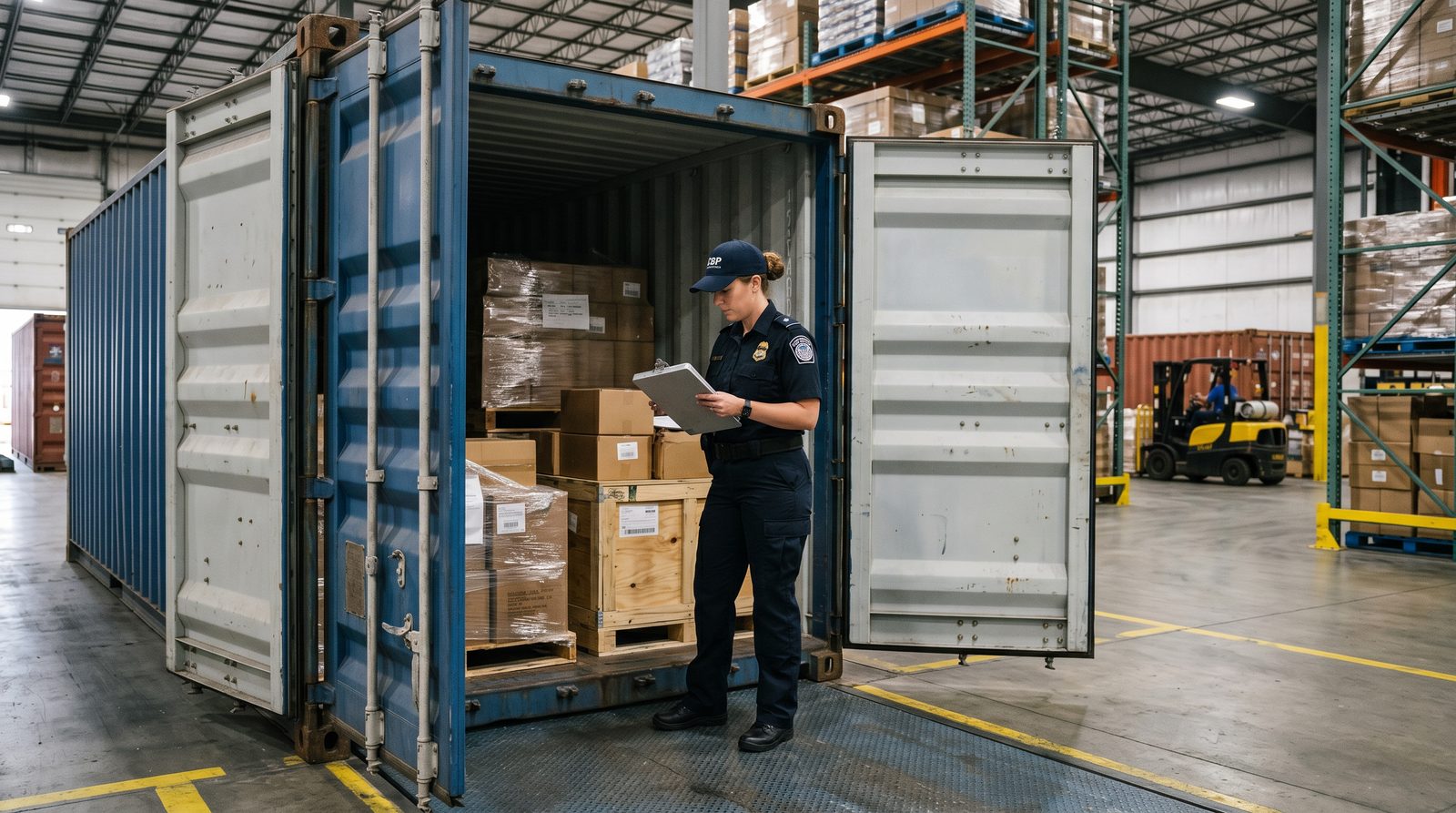
Container at customs hold checkpoint, Port of Long Beach — Precision Worldwide Logistics

Need help with a container on hold right now? Call (714) 690-9344.

What Is a Customs Hold at the Port of Long Beach?

A customs hold is a directive from U.S. Customs and Border Protection (CBP) that prevents a container from being released from the terminal until CBP has reviewed, inspected, or cleared the cargo. Holds can be placed before a vessel arrives — based on manifest data or targeting intelligence — or after the container has been discharged at the terminal.

Not all holds are created equal. CBP uses several distinct hold types, each with its own trigger, resolution path, and timeline. Understanding which type of hold your container is facing is the first step toward an efficient response — and directly affects what drayage coordination is required.

At the Port of Long Beach, customs holds are administered through the Los Angeles / Long Beach Seaport port complex, one of the highest-volume and most heavily scrutinized customs districts in the United States. Volume and targeting activity at this complex make customs holds a routine occurrence across all cargo categories.

For an overview of our full range of port services, see our Long Beach drayage services page.

Types of CBP Holds and Exams at Long Beach

VACIS Exam (Non-Intrusive Inspection / X-Ray)

The VACIS exam — formally known as a Non-Intrusive Inspection (NII) — is the fastest and least disruptive of the CBP exam types. The container is driven through a Vehicle and Cargo Inspection System (VACIS) X-ray machine, typically at the ocean terminal, without the seal being broken. CBP reviews the imaging results and either releases the container or escalates to a more involved exam. VACIS exam fees are charged by the terminal or facility — contact your customs broker for current fee schedules.

Drayage requirement: The container typically remains at the terminal for the X-ray pass. Coordination focuses on staying in contact with the terminal and customs broker to confirm release status as quickly as possible after imaging is complete.

Tailgate Exam

If CBP is not satisfied with VACIS results — or if a hold is issued that triggers a visual inspection without an X-ray — the cargo moves to a tailgate exam. In a tailgate exam, a CBP officer breaks the container seal, opens the doors, and visually inspects the contents from the rear of the container. No devanning is required. If the visual inspection raises no further concerns, the container is released.

A tailgate exam takes place at the pier and typically adds two to three days to cargo availability. It does not require transport to an off-site exam location, but it does require the terminal to schedule the inspection and CBP to dispatch an officer — a process that can run concurrently with other port operations depending on staffing.

CET Hold (Contraband Enforcement Team)

A CET hold — issued by CBP’s Contraband Enforcement Team or Anti-Terrorism Contraband Enforcement Team (A-TCET) — indicates CBP suspects the container may contain illegal cargo, including narcotics, weapons, or other contraband. CET holds are among the most serious CBP actions and typically result in the container being directed to a Centralized Examination Station (CES) for intensive review.

Shippers with containers under a CET hold should work immediately with their customs broker. The resolution timeline for CET holds is less predictable than for routine exam types and depends on CBP’s findings and investigative priorities.

Intensive Exam (CES Exam)

The intensive exam is the most thorough — and most logistically demanding — of the CBP exam types. The entire container is transported to a Customs Exam Site (CES), a private facility contracted and authorized by CBP to prepare shipments for inspection. At the CES, the container is fully devanned: cargo is offloaded, separated, and staged so that CBP officers can inspect individual items and take samples as needed.

Intensive exam fees vary significantly depending on container size, labor required, and the specific CES facility — your customs broker can provide current cost estimates. The exam itself generally takes five to seven days, though complex cases can run longer.

Important update — Controlled Drayage Policy (effective August 25, 2025): CBP’s Los Angeles/Long Beach Seaport has implemented a controlled drayage requirement for full-container load (FCL) shipments selected for Merchandise Enforcement Team (MET) and Agriculture (AQI) exams. Under this policy, containers selected for these exam types must be moved to the CES by a CES trucker — a motor carrier affiliated with or contracted by the CES operator and approved by CBP — rather than by an importer- or broker-selected carrier. This policy change affects how intensive exam drayage is coordinated. Shippers should confirm current controlled drayage requirements with their customs broker when a hold is placed.

Other CBP Hold Types

Beyond exam-specific holds, CBP issues several administrative hold types that may delay container release:

These holds typically resolve through documentation submission and customs broker action rather than physical exam. Drayage coordination begins once CBP releases the hold and the container is cleared for outgate.

What Happens When Your Container Is Flagged at Long Beach — Step by Step

Understanding the sequence of events helps shippers and brokers respond quickly and minimize unnecessary demurrage accumulation.

Step 1: CBP Issues the Hold

CBP notifies the importer or customs broker electronically through the Automated Commercial Environment (ACE) system. Holds can be issued before vessel arrival or after discharge. The terminal simultaneously receives a “hold” flag that prevents the container from being outgated.

Step 2: Customs Broker Responds

The importer’s customs broker is responsible for coordinating the CBP response — submitting documentation, requesting exam type clarification, and communicating with CBP on resolution timelines. The broker also selects the exam site for applicable exam types (subject to the controlled drayage policy for MET and AQI exams).

Step 3: Exam Type Determined

CBP specifies the exam type: VACIS, tailgate, or intensive (CES). This determines whether the container stays at the terminal or must be transported to an off-site exam location.

Step 4: Drayage Coordination Begins

For containers that remain at the terminal (VACIS, tailgate), the drayage company monitors exam status and coordinates pickup as soon as CBP releases the hold and the terminal shows an outgated status. For CES exams, drayage to the exam site must be arranged — either through the CES trucker (for controlled drayage-applicable exams) or through a carrier coordinated by the broker.

Step 5: Exam Completed and Hold Released

Once CBP completes the inspection and releases the hold, the container is available for outgate. For CES exams, the devanned cargo must also be re-stuffed into the container before transport — a step that adds time and cost to the exam cycle.

Step 6: Final Drayage to Destination

The container moves from the terminal (or CES) to the final delivery destination. Precision coordinates this move promptly upon release to minimize further demurrage exposure.

For time-critical releases, ask about our same-day drayage capability for containers coming off hold.

Exam Site Logistics at the Port of Long Beach

The Port of Long Beach and the broader POLB/POLA complex are served by multiple Centralized Examination Stations (CES facilities) in the surrounding industrial areas. When a container is directed to an intensive exam, the CES operator — not the importing party — typically controls the scheduling of the devanning and inspection appointment, coordinating directly with CBP.

Key logistics considerations for CES exams:

Precision’s dispatch team coordinates with the customs broker and CES facility to position for final delivery pickup as quickly as possible once the exam and re-stuffing are complete.

Foreign Trade Zone (FTZ) Drayage at Long Beach

For importers managing customs duty costs or timing, the Port of Long Beach area is served by several Foreign Trade Zone (FTZ) facilities. FTZs are designated areas where cargo can be stored, processed, or manufactured without paying U.S. customs duties until the goods enter U.S. commerce — or not at all if the goods are re-exported.

Precision provides drayage to FTZ facilities in the greater Long Beach / Los Angeles area. Common FTZ use cases relevant to customs hold situations include:

Precision coordinates FTZ drayage movements as directed by the importer’s customs broker. Our TWIC-cleared drivers are authorized for access to the secure port and terminal environments required for these moves.

How Precision Minimizes Demurrage on Customs Hold Containers

Demurrage — the daily charge assessed when a container remains at the terminal beyond its free time — continues to accrue whether or not a customs hold is in place. Shippers frequently discover that the demurrage cost from a customs hold exceeds the exam fees themselves, particularly for intensive exams that take five to ten or more days to resolve.

Precision takes the following steps to help minimize demurrage exposure on customs hold containers:

Monitor hold status daily. Our team checks container status regularly so we’re positioned to act the moment CBP releases the hold and the terminal shows the container as available for pickup.

Coordinate pickup for same-day or next-day release. When a hold clears, speed matters. Our La Mirada yard is approximately 20 minutes from the Port of Long Beach terminals, which means shorter positioning time and faster execution when a container becomes available on short notice.

Communicate proactively with the customs broker. We work in coordination with the importer’s broker throughout the hold period so that drayage resources are pre-positioned, not scrambled at the last minute.

Pre-stage for CES delivery. When a container is directed to a CES exam, we coordinate the timing of CES transport (where permitted by CBP) to minimize the gap between terminal availability and exam commencement.

Consider pre-pull to avoid additional terminal demurrage. In cases where the customs broker anticipates a short exam cycle, our operations team can discuss whether staging the container at our yard between the exam and final delivery is a cost-effective option compared to leaving it at the terminal.

If your container is approaching or has already exceeded free time, call (714) 690-9344 immediately. For containers with urgent last-free-day pressure, see our same-day drayage page.

Why Choose Precision for Customs Hold Drayage at Long Beach?

35 Years of Port Experience

Precision Worldwide Logistics has operated at the Port of Long Beach for over 35 years. Our team knows the terminals, the exam sites, and the operational rhythms of customs hold management. Customs hold drayage is not an edge case for us — it’s a routine part of our Long Beach operations.

TWIC-Cleared Drivers

All Precision drivers hold Transportation Worker Identification Credentials (TWIC), required for unescorted access to secure port areas. This credential is non-negotiable for terminal access and is confirmed for every driver on our roster.

Asset-Based Operation — Our Own Trucks, Chassis, and Yard

Precision owns our trucks, chassis, and yard. We are not a freight broker matching your freight to a third-party carrier. When you call us, you get Precision equipment and Precision drivers — not a subcontracted carrier with different operating standards. This matters for customs hold drayage, where reliability and accountability are critical.

Hazmat-Endorsed Drivers

Our CDL drivers carry hazmat endorsements (H endorsement), which means we can handle customs hold containers across a broader range of cargo types — including Class 9 miscellaneous dangerous goods. If your container on hold contains hazardous materials, Precision is equipped to manage that complexity. See our hazmat drayage page for details on our hazmat capabilities.

La Mirada Location — 20 Minutes from the Port

Our terminal in La Mirada puts us closer to the Port of Long Beach than most regional carriers. When a hold clears unexpectedly, proximity is a direct operational advantage.

Coordination, Not Just Transportation

Customs hold situations require communication — with the terminal, with the customs broker, with the CES facility. Precision’s dispatch team manages that coordination as part of the job, not as an additional service.

Request Customs Hold Drayage Service

When contacting Precision about a container on customs hold, have the following ready:

Our operations team will coordinate with your broker, confirm driver availability, and position for pickup as quickly as CBP’s hold resolution allows.

Call (714) 690-9344 — during business hours for immediate coordination on customs hold containers at Port of Long Beach.

Or submit the contact form below and a member of our operations team will respond promptly.

Frequently Asked Questions

What types of customs holds require drayage coordination at Port of Long Beach?

The holds that most directly require drayage coordination are those that direct a container to a Customs Exam Site (CES) — primarily intensive exams and CET (Contraband Enforcement Team) holds. VACIS (X-ray) exams typically occur at the terminal, and the container does not need to move to an off-site exam location. Tailgate exams also occur at the terminal pier. For VACIS and tailgate exams, drayage coordination focuses on monitoring hold status and picking up immediately upon release. For intensive and CET exams, transport to the CES facility must be coordinated — and under CBP’s controlled drayage policy effective August 2025, MET and AQI intensive exam movements must use a CES-affiliated trucker rather than an importer-selected carrier.

How long does a customs hold typically last at Long Beach?

It depends heavily on the hold type. A VACIS (X-ray) exam may resolve within one to two days if imaging results are satisfactory. A tailgate exam typically adds two to three days to container availability. An intensive exam at a CES facility generally takes five to seven business days, and can run longer in complex cases or during periods of high CBP exam volume. CET holds do not follow a predictable timeline. All of these timeframes are in addition to any time required to resolve the underlying hold documentation before an exam is even scheduled. Demurrage accrues throughout.

Does demurrage keep running while my container is on customs hold?

Yes. Terminal demurrage charges continue to accrue during a customs hold in most cases. The steamship line’s free time clock typically begins running after the container is discharged from the vessel, regardless of whether a customs hold is in place. Some steamship lines offer a demurrage dispute process specifically for customs-held containers, but these outcomes vary and are not guaranteed. The best strategy is to resolve the hold and execute the pickup as quickly as possible — which is why Precision monitors hold status daily and positions for rapid pickup upon release.

Can Precision handle a customs hold container that also contains hazardous materials?

Yes. Precision’s CDL drivers carry hazmat endorsements (H endorsement), and we are experienced with Class 9 miscellaneous dangerous goods, which is one of the most common hazmat categories in international container shipping. For other hazmat classes (1–8), contact us to confirm capability for your specific cargo. A customs hold on a hazmat container does not change the underlying hazmat handling requirements — placarding, documentation, and routing compliance still apply throughout the drayage move. See our hazmat drayage page for full details.

What is the difference between a CET exam and an intensive exam?

A CET hold is issued by CBP’s Contraband Enforcement Team when there is suspicion of illegal cargo — narcotics, weapons, or other prohibited goods. A CET hold typically leads to an intensive exam at a CES facility, but it is classified separately because it carries different investigative implications and resolution processes. An intensive exam, by contrast, can be triggered by any escalated hold — including a VACIS exam that produces unclear imaging results — without contraband suspicion. Both result in the container being transported to a CES and fully devanned for inspection, but the CET hold involves a more serious enforcement context and less predictable resolution timeline.

Precision Worldwide Logistics, Inc. | La Mirada, CA | (714) 690-9344

Asset-based drayage — TWIC-cleared drivers, 35 years at the Port of Long Beach.