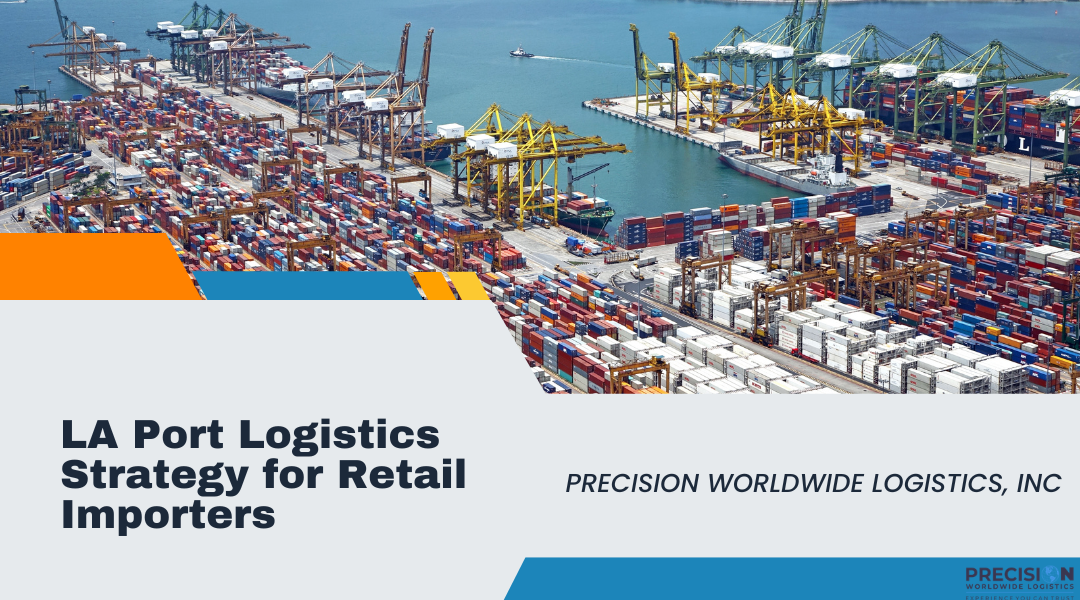
Using the Ports of Los Angeles and Long Beach as part of your retail import strategy gives you direct access to the largest trade gateway in North America. Every shipment that moves through these ports shapes how quickly and efficiently your products reach stores and customers. Building your logistics strategy around this port complex allows you to improve speed-to-market, control costs, and strengthen your retail supply chain performance.
You face constant choices about where to position inventory, how to route freight, and which partners can help you handle congestion and capacity constraints at the ports. Each decision affects cost, delivery time, and customer satisfaction. By understanding how container flow, drayage, and transloading operate across Los Angeles and Long Beach, you can design a system that balances efficiency with flexibility.
With more than 25 years of experience, Precision Worldwide Logistics, Inc. uses its La Mirada facility and asset-based operations to help importers like you move goods with precision and reliability. Guided by sound logistics design, you can turn port complexity into a competitive advantage and ensure your retail import flows perform consistently in any market condition.
Strategic Context for Retail Import Flows
You manage your import flows based on timing, product velocity, and route advantages. Data-driven planning helps you adjust shipments through the Los Angeles port system, align with suppliers, and maintain consistent product availability during shifts in demand.
Import Volume Profiles and SKU Velocity Patterns
You likely track SKU velocity across product categories to identify which imports warrant earlier shipment. Fast-moving SKUs—such as seasonal toys, personal electronics, or household goods—often require higher import volumes, tighter replenishment windows, and closer alignment with supply chain partners.
Retailers like Walmart and Target have used front-loading strategies, shipping ahead of tariff or labor disruptions. This approach provides steadier distribution flow but increases short-term inventory holding. For slower-moving SKUs, smaller and more frequent shipments can reduce warehouse congestion and cash tied up in stock.
Example import pattern:
| Product Category | Typical Import Frequency | Inventory Allocation | Priority Level |
|---|---|---|---|
| Fast-selling toys | Monthly or biweekly | Higher | High |
| Apparel basics | Monthly | Moderate | Medium |
| Home décor | Quarterly | Lower | Low |
Using volume and SKU data, you can balance transport cost, warehouse space, and port processing times across West Coast gateways.
Seasonal Demand Cycles and Replenishment Timing
You plan imports months ahead of peak demand to match retail sales calendars. Back-to-school, holiday, and summer leisure periods each drive distinct patterns in purchase orders and port arrivals.
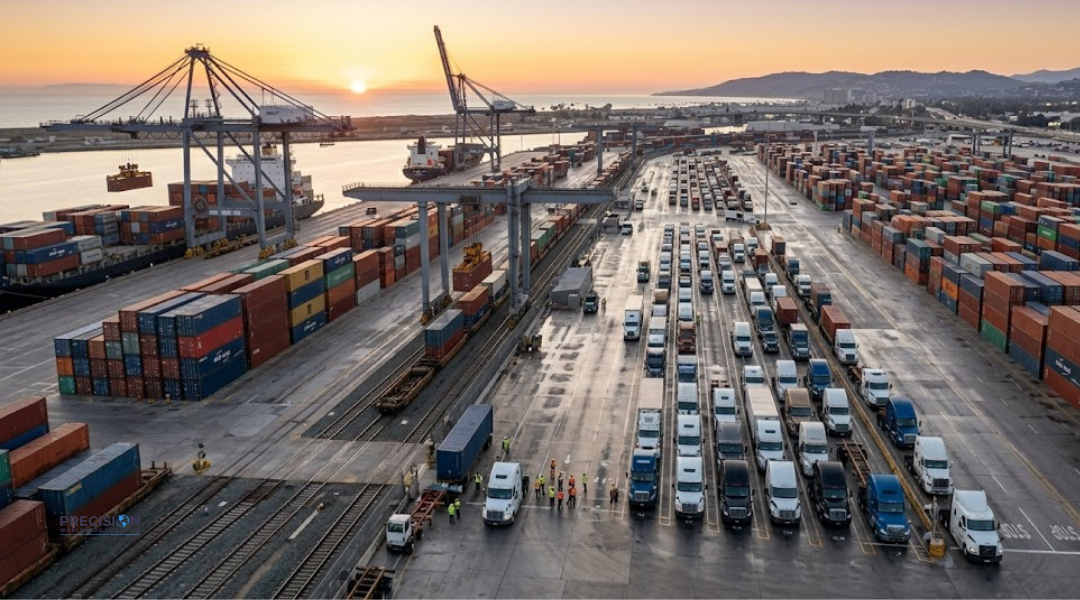
During high-demand seasons, early booking and coordination with carriers help avoid congestion at LA and Long Beach terminals. Leading importers often bring containers in earlier to bypass spot rate spikes and labor slowdowns. In slower months, you might scale down volumes and schedule maintenance or vendor evaluations.
Maintaining coordination with logistics partners—freight forwarders, customs brokers, and drayage operators—keeps shipments aligned with store and e-commerce timelines. Well-timed replenishment prevents stockouts while limiting costly overflow storage.
When LA Port Routing Is Advantageous
Routing through the Los Angeles and Long Beach ports is often advantageous when time-to-market outweighs cost. You gain shorter transit from Asian suppliers and access to extensive intermodal rail links serving U.S. retail hubs.
Use LA routing when:
- You import from East Asia with delivery targets under 20 days.
- You need quick inland transfer via BNSF or Union Pacific connections.
- Your supply chain partners operate West Coast distribution centers.
However, during peak congestion or regional labor risks, alternate ports such as Houston or Savannah may offer better reliability. Choosing LA strategically involves balancing transit time, freight rates, and port throughput visibility so your import flow remains predictable despite external disruptions.
System Constraints Across Port of Los Angeles and Port of Long Beach
You face several structural limits when routing shipments through the San Pedro Bay Port Complex. Space, labor, and equipment shortages restrict how fast cargo moves from vessel to distribution center, and each constraint affects cost, timing, and reliability.
Terminal Congestion and Appointment Systems
Terminal congestion remains a key challenge at the Ports of Los Angeles and Long Beach. Peak periods often push yard density above operational norms, causing vessel queues and increasing dwell times. In past years, waiting times reached over a week during supply surges. Even small slowdowns ripple across regional warehousing and trucking schedules.
You must work within each terminal’s appointment system for drayage pickups and returns. These systems aim to balance yard traffic but can create bottlenecks when slots fill quickly. Some operators have expanded gate hours or implemented “peel-off” programs to pre-stage containers, yet uneven adoption and varying processes between terminals can create confusion.
Monitoring gate turn times and scheduling flexibility help reduce your exposure to congestion. Tools that integrate port data feeds or third-party tracking platforms give better time windows for dispatching trucks efficiently.
Chassis Supply and Container Dwell Variability
A shortage of available chassis—the trailer frames used to move containers—continues to constrain port efficiency. When containers sit too long on wheels inside terminals, chassis circulation slows, affecting your ability to pick up imports on time.
The Ports of Los Angeles and Long Beach rely on pooled chassis systems shared across providers. During import surges, shared pools tighten as ocean carriers, trucking companies, and leasing firms compete for limited inventory. The result is irregular pickup windows and excess dwell at cargo terminals.
You can reduce delays by arranging off-dock storage yards or scheduling early chassis reservations. Tracking average dwell by terminal offers insight into which facilities consistently perform better. Transparency across chassis providers remains limited, so maintaining direct communication with logistics partners is critical.
Rail Versus Truck Exit Capacity Limitations
Both ports depend on a mix of on-dock rail and truck drayage to move containers inland. Rail capacity helps reduce road congestion, but current infrastructure limits how much port cargo can leave by train. Projects such as the Pier B On-Dock Rail Support Facility in Long Beach will expand lift capacity, yet full benefits may take years to realize.
Truck exits face their own pressure from driver availability, gate schedules, and nearby freeway congestion. Strikes or labor disruptions compound these issues quickly. You can plan around these constraints by balancing rail and truck mode splits based on destination, season, and available capacity.
| Mode | Main Advantage | Key Limitation |
|---|---|---|
| On-dock rail | Lower emissions, faster intermodal flow | Limited infrastructure, scheduling conflicts |
| Truck drayage | Flexible routing, short-haul speed | Road congestion, chassis shortages |
Using both transport modes strategically allows you to reduce dependence on any single exit point, helping stabilize your logistics strategy through the Port of Los Angeles and Port of Long Beach.
Inventory Positioning and Flow Design Decisions
You make critical choices about how inventory moves from the Port of Los Angeles through your supply network. The balance between distribution models, routing options, and inventory timing shapes your cost, speed, and resilience in serving retail demand across multiple markets.
Direct-to-DC Versus Transload Distribution Models
Choosing between shipping containers directly to distribution centers (DCs) or transloading them near the port changes how quickly inventory becomes available for fulfillment.
When you send containers straight to your DC, you reduce handling complexity but may face higher inland transport costs and slower inventory availability. This model suits stable demand and high-volume shipments bound for a single market.
With transload distribution, you unload ocean containers at a nearby facility and transfer goods into domestic trailers before moving inland. This approach lowers container dwell time and improves flexibility in routing. It often shortens transit by repositioning freight faster and balancing inventory across regions before final distribution.
| Model Type | Key Benefit | Typical Use Case |
|---|---|---|
| Direct-to-DC | Simpler handling | High-volume, single-market demand |
| Transload | Faster turnover, flexible routing | Mixed destinations, variable demand |
Understanding these trade-offs helps you select the right approach for your cost structure and service goals.
Inland Routing to Regional Versus National Networks
Where you move your products after the port determines how well your network supports delivery speed and inventory balance. Routing directly to a national DC centralizes storage, often lowering fixed costs but increasing the distance to end markets. This can lead to longer lead times and higher outbound freight.
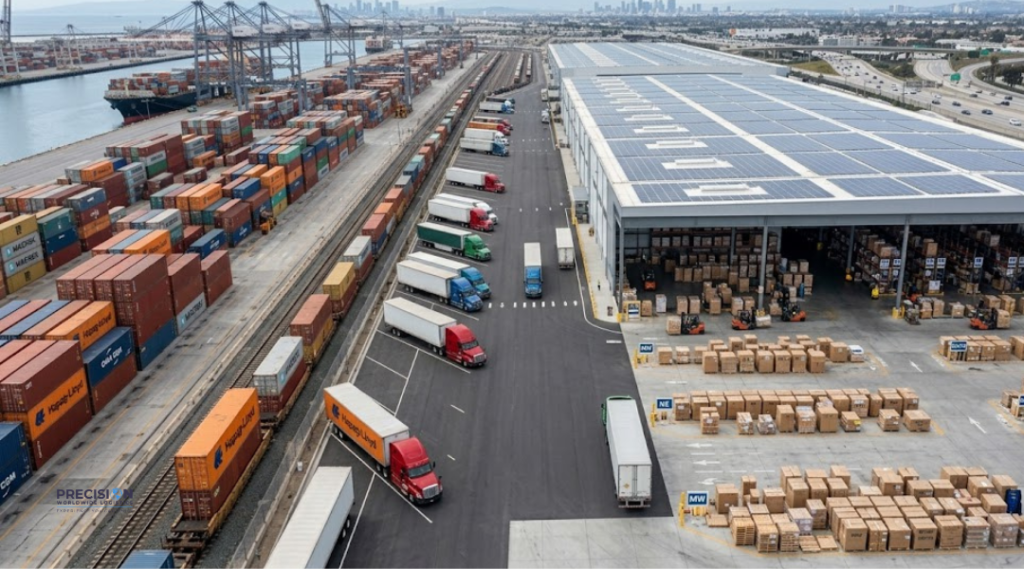
Alternatively, routing inventory to regional DCs enables quicker delivery and localized fulfillment. Port transloading supports this model by allowing you to divide shipments for multiple regional markets early in the flow. It adds complexity but improves responsiveness to regional sales trends and promotions.
Many retailers adopt a hybrid approach. You may stage fast-moving goods in regional hubs while slow movers remain in a national DC. This setup keeps transportation efficient and helps you adjust routing as pricing or demand shifts.
Buffer Inventory Versus Just-in-Time Replenishment
Balancing buffer stock and just-in-time (JIT) replenishment affects how well you respond to delays or spikes in demand. With buffer inventory, you hold extra stock in DCs or cross-dock points to absorb uncertainty in port throughput or transportation schedules. It increases carrying costs but prevents stockouts during short-term disruptions.
JIT strategies, by contrast, keep inventory lean and prioritize consistent flow through the network. This works best when supplier lead times are predictable and visibility tools give you real-time tracking from origin to store. Ports like Los Angeles can support JIT only if you have reliable transload partners and flexible inland capacity.
You often find value in combining both tactics. Maintaining minimal safety stock near major markets while keeping primary flows synchronized with inbound shipments helps balance efficiency with risk control.
Tradeoffs Between Cost Efficiency and Service Levels
You need to balance transportation costs, inventory levels, and service speed to keep your retail import operations competitive. Decisions about shipping modes, warehouse timing, and storage risk directly affect how fast you serve customers and how much capital you tie up along the way.
Transportation Spend Versus Delivery Speed Commitments
Moving shipments through the Port of Los Angeles gives you access to major highways, rail lines, and air hubs—but faster isn’t always better. Each mode of transport carries its own tradeoff between cost and speed.
| Mode | Typical Speed | Relative Cost | Best Use Case |
|---|---|---|---|
| Air Freight | 1–3 days | Highest | Urgent, high-value goods |
| Ocean Freight | 15–35 days | Lowest | Bulk or low-margin goods |
| Intermodal (Sea + Rail/Truck) | 7–20 days | Moderate | Balanced lead times |
Air service ensures short transit times but can add 5–10× more to transportation costs compared to sea freight. Truck and rail offer flexibility but tend to lengthen delivery commitments. You should match service promises to product value and seasonal demand rather than defaulting to speed. This approach minimizes unnecessary spending while keeping realistic delivery windows.
Storage Deferral Versus Immediate Fulfillment Readiness
When importing through LA, you face a choice between storing products close to market or waiting until orders arrive before final distribution. Holding stock near customers supports fast fulfillment but raises warehouse rent, labor, and inventory holding costs.
Delaying storage—by keeping goods in bonded or off-dock facilities—reduces those overheads but may extend delivery times once sales pick up. Many retailers use cross-docking or shared third-party warehouses to manage this balance. These options give partial readiness without the full cost of maintaining permanent inventory space. To decide which strategy fits, track inventory turnover, storage fees, and customer delivery expectations to see where extra readiness adds or erodes profit.
Risk Exposure to Demurrage and Stockouts
Extended dwell time at ports can lead to demurrage charges, which occur when containers stay too long at the terminal. These costs can exceed the savings from slower shipments if not managed carefully. On the other hand, minimizing inventory or delaying replenishment can create stockouts, causing lost sales and reputation damage.
You can reduce both risks through better scheduling and data visibility. Use real-time container tracking and coordinate with drayage providers to clear cargo quickly. Keeping a small amount of safety stock inland helps offset customs or rail delays. Each tactic costs money, so evaluate the tradeoff between avoidance of penalties and the value of uninterrupted shelf availability.
Precision Worldwide Logistics, Inc. Within Retail Import Flows
You need logistics partners that can maintain reliability through port congestion, variable vessel schedules, and tight delivery timelines. A fully asset-based provider located near the Los Angeles and Long Beach ports gives you stronger control of drayage, transloading, and inland distribution while keeping operating costs predictable. Precision Worldwide Logistics, Inc. in La Mirada, California focuses on these capabilities to serve retail importers moving high volumes through Southern California.
Asset-Based Drayage Control Under Variable Port Conditions
Drayage from the Los Angeles and Long Beach ports often becomes a delay point for retail freight. Precision Worldwide Logistics uses an asset-based model, operating its own trucks and chassis instead of relying on outside brokers. This gives you more consistent scheduling and eliminates dependence on shared chassis pools, which often cause disruptions during peak port congestion.
Because the company manages its own fleet, it can respond quickly to port condition changes, such as yard delays or chassis shortages. For retailers importing time-sensitive goods, this control ensures containers move within planned delivery windows. Precision also keeps communication lines open, so you get real-time updates on container pickups and deliveries without waiting for third-party confirmations.
This approach places responsibility for drayage performance directly within a single organization, which is valuable when you’re coordinating volumes from multiple ocean carriers across variable port environments.
Transloading Coordination Aligned With La Mirada Distribution Access
Once containers leave the port, transloading enables you to shift freight efficiently from ocean containers to domestic trailers. Precision Worldwide Logistics operates transloading services near La Mirada, less than 30 minutes from the ports. This location aligns with major trucking corridors and regional distribution centers used by retail importers.
In practice, proximity reduces dwell times and prevents unnecessary mileage between facilities. You can unload, sort, and reconfigure shipments faster for store distribution or fulfillment center delivery. The company’s technicians manage cargo transfers with attention to packaging integrity and labeling accuracy, which helps maintain product tracking continuity through the 3PL network.
For retailers importing through Los Angeles, this coordination means a smoother flow from ocean freight to inland delivery points, supporting seasonal demand cycles and volume spikes.
Integration of Warehousing and Over-the-Road Distribution
Precision Worldwide Logistics also runs warehousing and over-the-road (OTR) operations that integrate into its drayage and transloading network. You can use racked or open-floor storage at its La Mirada facilities depending on product type and turnover rate. This flexibility supports both short-term staging of imported cargo and long-term inventory programs.
The company’s in-house OTR fleet connects inventory to major markets beyond Southern California. With its combined 3PL structure, you can manage order fulfillment, last-touch packaging, and outbound delivery under one system. It minimizes handoffs between providers and offers better visibility for tracking shipments from the port to retail outlets.
By linking warehousing and transportation functions, the operation streamlines your post-port logistics, helping you maintain tighter control over inventory flow and delivery performance.