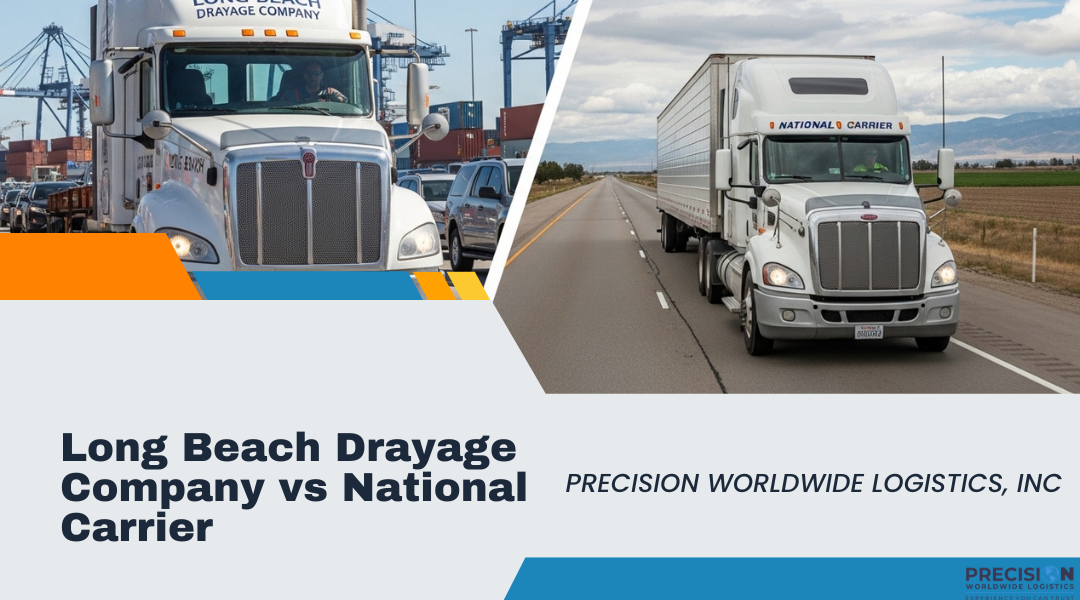
Choosing between a Long Beach drayage company and a national carrier affects how fast your containers move, how much control you have, and how well you handle disruptions. Local providers focus on one region with deep port knowledge and local relationships. National carriers offer broader networks and more transportation options across the country.
The main difference is that Long Beach drayage companies specialize in moving containers short distances from the Port of Long Beach to nearby locations, while national carriers provide coast-to-coast coverage with multiple service options and greater flexibility during supply chain disruptions.
Your decision depends on where your freight needs to go and how often your shipping patterns change. This article breaks down the key differences in how these providers operate, what they control, and how they work with the Port of Long Beach. You’ll also learn what matters most when choosing the right partner for your business.
Operational Scope And Service Boundaries
Long Beach drayage companies typically operate within a 100-mile radius of the port, while national carriers maintain networks spanning multiple states and regions. This difference in operational scope directly affects how each handles container movements, resource allocation, and service commitments.
Regional Port Focus Versus Multi-Market Coverage
Long Beach drayage companies concentrate their operations around the Port of Los Angeles and Port of Long Beach complex. These companies position their equipment and drivers near the terminals to handle your container drayage needs within the local metropolitan area. Their service boundaries usually extend 50 to 100 miles from the port.
National carriers operate across multiple markets and port regions simultaneously. Your shipments can move through different port complexes like New York/New Jersey, Savannah, or Houston using the same carrier. These companies maintain presence at various terminals nationwide but spread their resources across broader geographic areas.
The regional focus of Long Beach drayage services means faster response times for local moves. You get drivers who know specific terminal layouts, gate procedures, and traffic patterns around the LA/Long Beach port complex. National carriers offer geographic flexibility but may rely on partner networks or subcontractors in markets where they lack direct presence.
Dedicated Drayage Lanes Versus Diversified Freight Networks
Local drayage companies run dedicated routes between the ports and nearby warehouses, distribution centers, and rail ramps. Your containers move on established lanes that these companies operate multiple times daily. They focus exclusively on short-distance container movements rather than mixing drayage with other freight types.
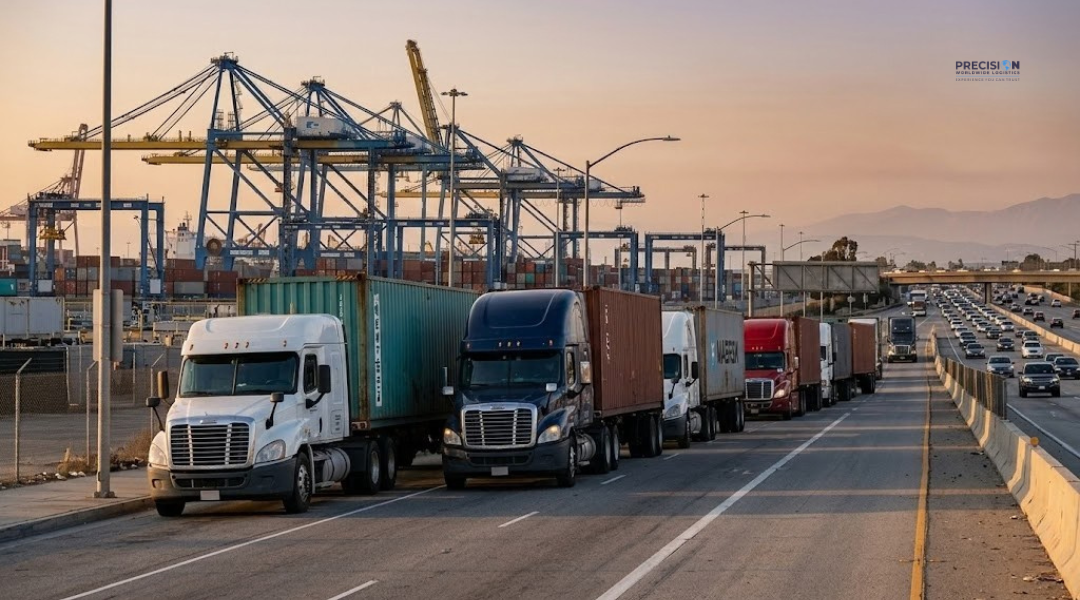
National carriers integrate drayage services into broader transportation networks that include truckload, intermodal drayage, and long-haul freight. Your container might transfer between different service divisions within the same company. This diversification lets you bundle services but means drayage competes for equipment and driver availability with other freight operations.
A dedicated drayage partner maintains equipment specifically for port and rail drayage work. National carriers shift assets between service types based on demand across their network.
Where Specialization Limits Or Strengthens Capacity
Long Beach drayage companies build deep expertise in local port operations but have limited reach beyond their regional boundaries. Your containers benefit from specialized knowledge of terminal requirements, chassis availability, and appointment systems at LA/Long Beach facilities. However, you need different providers when shipping through other ports or requiring inland distribution beyond their service area.
National carriers provide capacity across multiple regions but may lack the same depth of local terminal relationships. Their diversified networks give you backup options when one market faces congestion. Yet they might not match the focused attention that regional specialists provide for port-specific challenges.
Specialization strengthens capacity for shippers who consistently move containers through Long Beach. It limits flexibility for those requiring multi-port strategies or nationwide distribution networks.
Control Models And Asset Structure
Long Beach drayage companies typically own their trucks and chassis, while national carriers often coordinate third-party capacity through brokerage networks. This difference affects everything from equipment availability to who makes real-time decisions when issues arise at the terminal.
Asset-Based Fleets Versus Brokered Capacity
When you work with a Long Beach drayage company, you’re usually getting an asset-based carrier that owns its trucks, employs its drivers, and maintains its equipment. These companies control their operations directly. National carriers often operate as non-asset-based providers or freight brokers who arrange transportation through independent owner-operators and partner carriers.
The distinction matters during port congestion or equipment shortages. Asset-based carriers prioritize their own customers because they control the trucks. Brokers must negotiate with third-party carriers who may have competing commitments.
Key differences:
- Asset-based: Direct control, owned equipment, employed drivers
- Brokered: Coordinated capacity, contracted carriers, variable service levels
During peak shipping seasons, asset-based fleets can guarantee capacity because they own the resources. Brokered networks depend on market availability and carrier willingness to accept loads.
Chassis Access And Equipment Prioritization
Chassis availability at the Ports of Los Angeles and Long Beach directly impacts your container pickup times. Long Beach drayage companies often maintain their own chassis pools or have established agreements with local chassis providers. This gives them priority access during shortages.
National carriers using brokered capacity rely on whatever chassis their third-party drivers can secure. You face longer wait times when chassis pools run low because local asset-based carriers serve their direct customers first.
Some Long Beach providers operate tri-axle chassis for overweight corridors and specialized equipment for heavy cargo. National carriers may need additional time to locate this equipment through their broker networks. Your specialized shipments move faster when the carrier owns the right chassis.
Dispatch Authority And Escalation Pathways
Your Long Beach drayage company dispatcher can reassign trucks, adjust driver schedules, and make immediate equipment decisions. They control the fleet directly. When a container faces last free day or a terminal closes early, local dispatchers reroute their own drivers without external negotiations.
National carriers using brokers must contact third-party carriers to request changes. This adds communication layers and response time. The broker makes a request, but the actual carrier decides whether to accommodate it based on their own priorities.
You get faster problem resolution with asset-based operations. The dispatcher has direct authority over drivers and equipment. Brokered operations require consensus between the broker and their carrier partners, which delays decisions during time-sensitive situations at the port.
Port Of Long Beach Working Dynamics
The Port of Long Beach operates on systems that reward local knowledge and daily engagement. Terminal appointments, traffic flows, and inland connections create patterns that separate experienced operators from occasional visitors.
Appointment Systems And Terminal Familiarity
The Port of Long Beach uses terminal-specific appointment systems that require direct knowledge of each facility’s booking windows and capacity limits. You need to understand when terminals release appointments, which typically happens 24 to 48 hours in advance. Missing these windows means your containers sit longer and incur demurrage charges.
Each terminal at the ports of Los Angeles and Long Beach has different gate hours, chassis requirements, and check-in procedures. Some facilities allow pre-pull services while others require live pickups. Your ability to navigate these differences directly affects turn times and daily container moves.
TWIC credentials and bonded carrier status are required for specific cargo types. Terminals also enforce strict weight limits and route restrictions based on local infrastructure.
Local Congestion Patterns And Route Adaptation
Morning peak hours from 6 AM to 10 AM create the heaviest congestion at Port of Long Beach terminals. You’ll encounter delays on major corridors including the 710, 110, and 405 freeways during these windows. Afternoon returns between 2 PM and 5 PM add a second wave of traffic.
Experienced port drayage operators use real-time data to adjust routes throughout the day. They know which terminals process trucks faster and which streets to avoid during peak periods. Surface streets like Alameda, Terminal Island, and Anaheim Street require local knowledge to navigate efficiently.
Weather, labor actions, and vessel arrivals create unpredictable congestion patterns. Your dispatcher needs direct communication with terminals to respond to these changes quickly.
Inland Distribution Links Within Southern California
The Port of Long Beach connects to major distribution centers within a 150-mile radius of Southern California. Your drayage moves often link to transload facilities in the Inland Empire, including Ontario, Riverside, and San Bernardino. These connections require coordination between port pickup and warehouse delivery appointments.
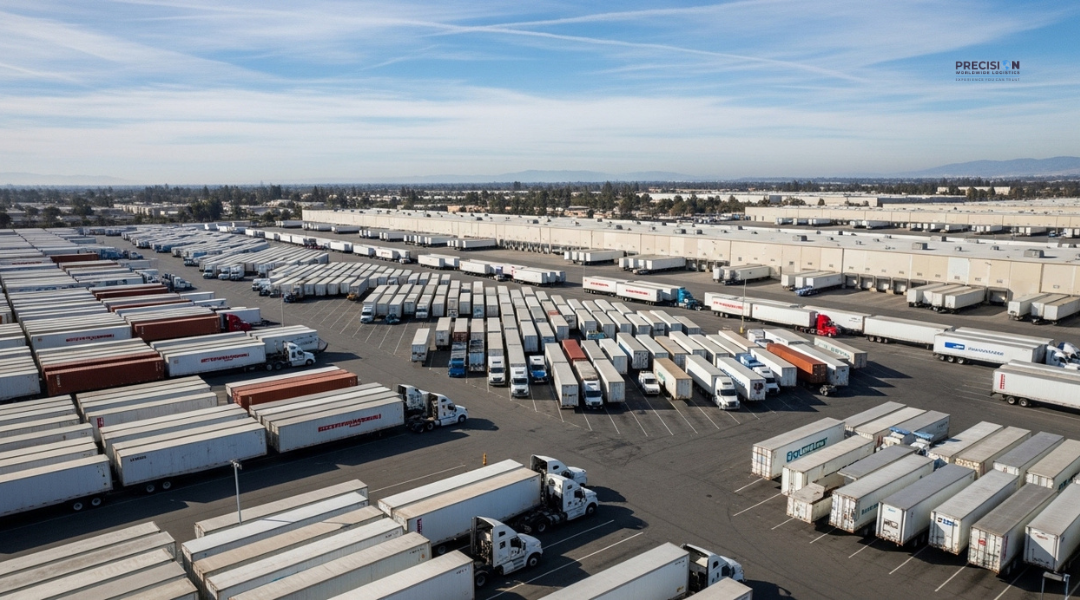
Drop-trailer programs and shuttle services between the ports of Los Angeles and Long Beach and inland facilities reduce empty miles. You can stage containers at nearby yards to avoid port congestion and per diem charges.
Regional FTL movements from port-adjacent warehouses to retail and manufacturing sites complete the inland distribution chain. Cross-dock operations allow you to break down containers and consolidate freight for final delivery across Southern California markets.
Perspective From Precision Worldwide Logistics, Inc.
Precision Worldwide Logistics operates its own trucks and chassis within 30 minutes of the Port of Los Angeles, which shapes how the company views the choice between local drayage providers and national carriers. Their asset-based model addresses specific coordination challenges that arise when moving containers from port terminals to nearby warehouses and beyond.
Aligning Drayage With Warehousing Near La Mirada, California
Your containers need somewhere to go after leaving the port. Precision Worldwide Logistics maintains warehouses close to both the Port of Los Angeles and Port of Long Beach, which cuts down the distance your freight travels during the first mile.
When you work with a company that controls both the drayage fleet and the warehouse space, your containers move directly from the terminal to racked storage or open floor storage without extra handoffs. This setup works well if you need cross-docking services. Your inbound containers can arrive at a distribution center where crews immediately transfer the cargo to outbound trucks.
The company also offers transloading at their facilities. You can convert your ocean container cargo into domestic shipping formats without arranging separate vendors. This matters when you want to switch from container loads to LTL shipments for final delivery. Having transload services at the same location as your drayage pickup point reduces delays and tracking complications.
Coordinating Container Flow Beyond The Port Gate
National carriers typically hand off your container at the port and move on to the next job. Precision Worldwide Logistics stays involved after the initial pickup because they operate the warehouses where many containers end up.
Your container arrives at their yard, and their team tracks it through unloading, storage, and preparation for the next shipping stage. You get updates from one company instead of calling multiple vendors. When detention fees or demurrage charges threaten your budget, having the drayage provider and warehouse under the same management helps you make faster decisions about container returns.
Their 30-year operating history in the Los Angeles market means they know local traffic patterns and terminal procedures. This knowledge helps when you need to coordinate tight pickup windows or manage multiple containers arriving on different vessels.
Integrating Short-Haul Control With Longer-Haul Planning
Drayage moves your freight from the port to nearby distribution centers. After that, you need over-the-road transportation to reach customers across the country.
Precision Worldwide Logistics operates interstate trucks alongside their local drayage fleet. This means you can arrange both the short haul from the port and the long haul to distant markets through one provider. Your cargo stays within their tracking system as it transitions from drayage to line-haul shipping.
When you need just the long-distance portion, they maintain partnerships with national carriers. You still get the benefit of their local control during drayage while tapping into larger carrier networks for cross-country moves. This setup gives you options based on your specific shipping lanes and timing requirements.
Their asset-based approach means they own the equipment handling your containers during the critical first miles. You avoid chassis pool shortages and drayage broker delays that can stop your supply chain during port congestion.
Tradeoffs In Speed, Flexibility, And Risk
When you choose between a Long Beach drayage company and a national carrier, you face important tradeoffs in how fast your cargo moves, how well your provider adapts to problems, and what risks you take on. Regional carriers excel at quick turnarounds in their home port, while national carriers offer backup options when disruptions hit.
National Scalability Versus Regional Responsiveness
Regional Long Beach drayage companies typically get your containers out of the port faster during normal operations. Their drivers know every terminal gate, every clerk, and every shortcut in the local area. You often get same-day or next-day service because all their equipment stays within the port region.
National carriers sacrifice some of this local speed for geographic flexibility. When port congestion hits Long Beach, they can reroute your freight to Oakland or other West Coast ports. This matters when labor disputes or equipment shortages create delays. You get options instead of being stuck waiting.
The tradeoff becomes clear during disruptions. A regional provider might have your container sitting idle if Long Beach terminals back up. A national carrier can pivot to rail dray services or cross-docking at alternative locations. You lose some local responsiveness but gain network agility.
Cost Predictability Versus Network Breadth
Regional drayage companies often offer more stable pricing year-round. They operate in one market and avoid the complexity of managing rates across multiple ports. You know what you’ll pay per move, and accessorial charges stay consistent.
National carriers charge differently based on their broader infrastructure costs. You might pay more per local move, but you get access to container storage yards throughout North America. When you need to divert cargo or store containers outside peak detention periods, these options reduce your total landed costs.
Real-time container tracking systems cost money to build and maintain. Larger national providers invest in technology platforms that show you exactly where your freight sits. Smaller regional companies may rely on phone calls and email updates. You trade immediate visibility for potentially lower base rates.
Accountability Structures During Peak Congestion
Regional carriers have limited capacity during peak seasons. When demand exceeds their driver and chassis availability, you might wait days for pickup. Their smaller teams mean less support staff to handle customer service issues when things go wrong.
National providers maintain larger operations teams and backup capacity. You get dedicated account managers and 24/7 support lines. Their compliance systems track detention fees, demurrage charges, and California emission rules automatically. This matters when one mistake triggers thousands in penalties.
The risk profile differs significantly. Regional companies might go under during major disruptions or lose key drivers to competitors. National carriers have financial reserves and driver pools to weather problems. You decide whether personal relationships with a local team outweigh institutional stability.