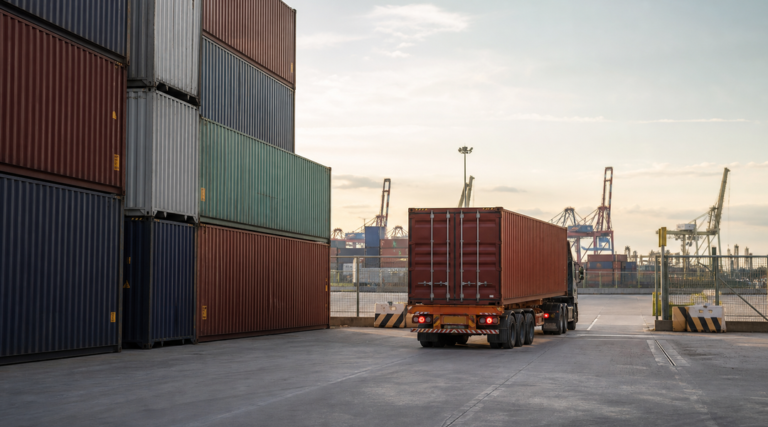
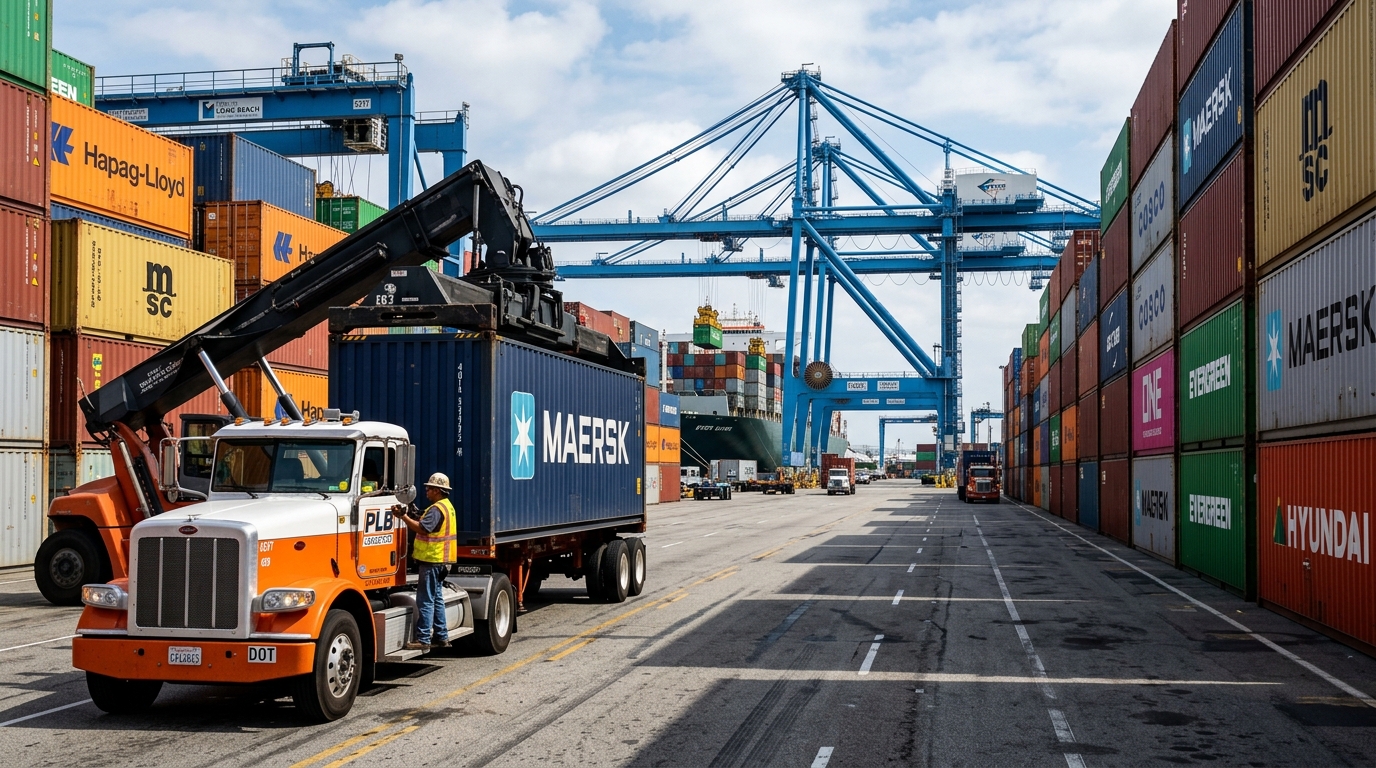
The Port of Long Beach is one container complex, but it operates like five separate terminals — each with its own gate system, appointment platform, congestion patterns, and operational quirks. For drayage carriers and the freight brokers, importers, and 3PLs who depend on them, knowing the differences between terminals isn’t optional. A missed appointment window, wrong gate, or unfamiliarity with a terminal’s automation system can turn a routine pickup into a multi-hour delay.
This guide breaks down every major POLB terminal from a drayage perspective: how each operates, which appointment system it uses, what drives congestion, and what experienced carriers know going in.
For a full overview of our Long Beach drayage services, visit our Port of Long Beach drayage page and our Long Beach drayage hub.
Port of Long Beach Terminal Complex Overview
The Port of Long Beach spans approximately 3,200 acres along 25 miles of waterfront in San Pedro Bay, making it the second-busiest container port in the United States. In fiscal year 2024–25, the port handled approximately 9.6 million TEUs — a 20.3% increase over the prior year. The port’s terminals are clustered in distinct piers, each operated by a different terminal management company under long-term lease from the Port.
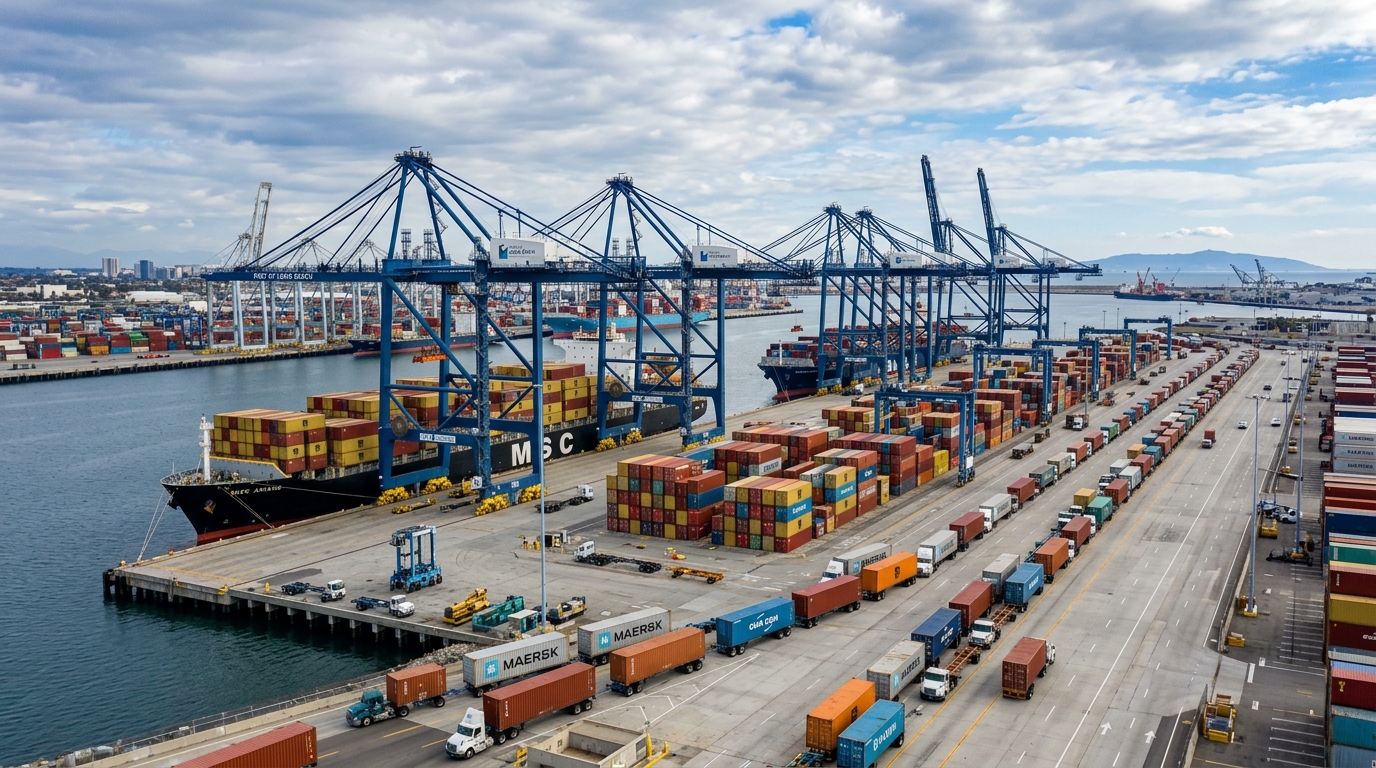
The five primary container terminals serving drayage carriers are:
| Terminal | Pier | Operator | FIRMS Code |
|---|---|---|---|
| TTI (Total Terminals International) | Pier T | TIL Group | Z952 |
| LBCT (Long Beach Container Terminal) | Pier E/Middle Harbor | LBCT LLC | WAC8 / W183 |
| ITS (International Transportation Service) | Pier G | ITS LLC | Y309 |
| PCT (Pacific Container Terminal) | Pier J | SSA Marine / Pacific Maritime Services | W182 |
| SSA Pier A | Pier A | SSA Marine | Z978 |
Each terminal requires appointments, manages its own scheduling platform, and has different gate hours that change weekly based on vessel schedules, ILWU labor agreements, and port conditions. Always verify current gate schedules directly with each terminal before planning a pickup.
Pier T / TTI — Total Terminals International
Overview
Total Terminals International (TTI) on Pier T is one of the largest container terminals on the U.S. West Coast. TTI began operations at Pier T in 2002 and has grown into a 154-hectare facility capable of handling vessels up to 19,000 TEU. The terminal operates 16 ship-to-shore cranes, 28 yard cranes, and offers 2.9 million TEU of annual capacity. On-dock rail at Pier T is among the best on the West Coast — 12 working tracks and 4 storage tracks totaling nearly 90,000 feet, capable of building trains up to 10,000 feet.
For drayage carriers, TTI is one of the higher-volume import discharge points in San Pedro Bay. The terminal serves major alliances and handles significant volumes of containerized cargo from Trans-Pacific and Asia-North America services.
Appointment System
TTI uses eModal for appointment scheduling. Starting in February 2025, TTI transitioned to a new terminal operating system (TOS) that changed gate entry procedures. Under the current system, drivers no longer receive a physical gate pass ticket. Instead, drivers verbally communicate an eModal Gate Code — up to six digits — to the tower clerk at the in-gate speaker. This code is found on the appointment confirmation screen in eModal and is separate from the container PIN or bill of lading number.
Key TTI appointment details:
- Appointments required for all transaction types: import deliveries, export loads, empty returns, and empty receivals
- Appointment leeway window: 30 minutes before and 30 minutes after scheduled appointment time
- All hazardous material documentation (for full-in moves) must be emailed to the HAZ clerk before the driver arrives — drivers pulling haz containers will not be stopped at a trouble window
- For dual transactions involving a full-out move, the full-out Gate Code must be communicated first
Gate Hours
TTI typically operates two shifts: a day shift from 07:00 to 16:59 and a night/OffPeak shift from 18:00 to 02:30. Gate hours vary week to week based on vessel schedules, ILWU stop-work days, and port conditions. Always verify the current week’s gate schedule at totalterminals.com before dispatch.
Drayage Tips for Pier T
- Book eModal appointments as early as available — slots fill fast for peak vessel discharge days
- RFID readers are installed on Hanjin Road approaching the gate, giving TTI real-time truck queue visibility. If the terminal is managing high volume, expect the appointment system to reduce load during meal break windows
- TTI uses flex shifts during meal hours to continue processing empties, but appointment slots are reduced — avoid scheduling around mid-shift breaks when possible
- Dual transactions are accepted; plan container pairings in advance to maximize productivity per trip
Pier E / Middle Harbor — LBCT (Long Beach Container Terminal)
Overview
The Long Beach Container Terminal (LBCT) at Pier E represents the most technologically advanced terminal at POLB — and arguably on the U.S. West Coast. Built through a redevelopment project that combined two aging shipping terminals into a single facility at Middle Harbor, LBCT is fully automated with electric horizontal transport, automated stacking cranes, and dual-hoist tandem-lift ship-to-shore cranes capable of handling four TEUs simultaneously.
The terminal’s capacity exceeds 3.5 million TEUs annually from three deep-sea berths along a wharf exceeding 4,200 feet. Channel depth is 76 feet, making LBCT capable of handling the largest container vessels currently operating. On-dock rail capacity is substantial: 8 working tracks with over 32,000 feet of capacity, handling more than 10,000 containers per week by rail.
LBCT’s Pier E is located at 201 South Pico Avenue, Long Beach, CA 90802.
Appointment System
LBCT requires appointments for all transaction types — import load deliveries (Dray In), export load receivals (Dray Out), empty returns, and empty receivals. Appointments are booked through the LBCT Trucker Portal at portal.lbct.com.
Key LBCT appointment details:
- Appointments become available at noon each day (changed from 11:00 a.m. effective August 2025) — book promptly as slots fill quickly for high-discharge days
- Import (Dray In) appointments: select an available timeslot from the next 45 available options
- Digital Electronic Interchange Receipt (EIR) is available for all transactions — no paper EIR required
- Dual transactions are supported and encouraged; plan pairings before booking
- Gate processing averages under two minutes per truck due to OCR technology and automated gate processing
Operational Characteristics
LBCT’s automation is its defining characteristic from a drayage perspective. The terminal uses Optical Character Recognition (OCR) at both the gate and vessel/rail operations, which means container identification at entry is largely automated. The sub-two-minute average gate processing time is faster than most terminals in the complex — when appointments are properly timed and documentation is in order.
The double-flex gate allows cargo availability as early as 6:00 a.m. on qualifying days, which can benefit carriers operating early starts to beat general traffic.
Drayage Tips for LBCT
- TWIC compliance is mandatory — LBCT enforces 100% TWIC credential verification
- Because the terminal is automated, documentation discrepancies are flagged early and efficiently; ensure container release and holds are cleared before arrival
- Book appointments at noon when they open — LBCT appointment slots for peak discharge days can fill within hours
- Dual transactions are smooth at LBCT given the automated gate system; experienced carriers routinely pair import pickups with empty or export drops
Pier G / ITS — International Transportation Service
Overview
International Transportation Service (ITS) operates on Pier G at 1281 Pier G Way, Long Beach, CA 90802. ITS holds the distinction of having installed the first on-dock rail system at the Port of Long Beach — a development that significantly reduced truck traffic in and around the terminal. The facility currently operates with five electric ship-to-shore cranes capable of servicing the largest container ships and maintains a competitive on-dock rail operation.
ITS is actively expanding. In July 2025, the terminal broke ground on a $365 million South Slip Fill Project that will fill in 19 acres of open channel, extend the existing quay by 560 feet (bringing the total dock length to approximately 3,500 feet), and grow the terminal from its current footprint to 277 acres. When completed in 2028, the expansion will increase ITS cargo-handling capacity by up to 50% and enable the terminal to simultaneously berth two 18,000 TEU vessels.
Appointment System
ITS uses eModal for appointment scheduling. Appointments can be booked up to five days prior to vessel arrival using Advanced Reservation Requests — a feature that benefits carriers handling time-sensitive cargo. Appointment slots are available in one-hour blocks, with a 30-minute window on either side (creating an effective two-hour window).
Key ITS appointment details:
- Appointments available via eModal at www.eModal.com
- Advanced reservations available up to five days before vessel arrival
- Dual transactions: no dual transactions after 01:30 on second shifts or after 15:30 on first shifts when no follow-up shift is scheduled — plan accordingly
- First shift: 07:00–17:00 (Grounded Import Delivery ends 16:30)
- Second shift: 17:00–03:00 (Grounded Import Delivery ends 02:30; Ingate closes at 01:30)
- Saturday operations: 07:00–15:30 (gate closed); no second shift on most Saturdays
Congestion Patterns
ITS is a high-volume terminal and congestion patterns can be pronounced around vessel discharge days. ILWU Stop Work days (typically one Thursday per month) close the second shift — plan delivery windows to avoid these dates. Check the weekly gate schedule at itslb.com before booking.
The ongoing South Slip Fill expansion will cause some operational adjustments through 2028 as construction proceeds — carriers should monitor terminal updates for any access changes near the south portion of the terminal.
Drayage Tips for Pier G
- Use Advanced Reservation on eModal for containers on vessels expected to discharge within five days — you get first access to preferred appointment windows
- Check empty receiving updates on itslb.com before dispatch — empty acceptance by container line and size changes frequently
- Avoid booking dual transactions on days without a follow-up shift, as the cutoff for dual acceptance is earlier
Pier J / PCT — Pacific Container Terminal
Overview
Pacific Container Terminal (PCT) occupies 256 acres on Pier J at 1521 Pier J Avenue East, Long Beach, CA 90802. The terminal is operated by Pacific Maritime Services, LLC (a subsidiary of SSA Marine) and serves major Trans-Pacific carriers. PCT provides 5,902 feet of berthing space across five berths at 48–50 feet of water depth, with 14 gantry cranes ranging from 50–65 tons of capacity and 39 gate lanes.
PCT is an important terminal for importers moving Trans-Pacific cargo, particularly on services that call Pier J as part of rotation with other San Pedro Bay terminals. The terminal includes on-dock rail with 114-railcar capacity and 685 reefer outlets for temperature-controlled cargo.
Appointment System
PCT manages appointments through a proprietary system powered by Tideworks Technology, accessible at pct.tideworks.com. Truckers create accounts and schedule appointments through the Forecast platform.
Key PCT appointment details:
- Appointment booking available through pct.tideworks.com (Tideworks Forecast)
- Dual transactions supported
- Gate hours vary by week — verify at the terminal or via PierPass-linked resources before dispatch
- Operations contact: (562) 983-1001
Drayage Tips for Pier J
- PCT’s 39 gate lanes provide good throughput capacity under normal conditions, but vessel bunching can create congestion — especially when multiple vessels discharge simultaneously on Trans-Pacific rotation days
- Verify reefer pickup procedures in advance if picking up temperature-controlled cargo; PCT has robust reefer infrastructure with 685 reefer outlets
- PCT sits adjacent to ITS on Pier G, making dual-terminal trips feasible for carriers picking up from both — coordinate appointment times to minimize deadhead
Pier A / SSA Marine
Overview
SSA Pier A, located at 700 Pier A Plaza, Long Beach, CA 90813, is one of SSA Marine’s two container terminal operations at POLB (the other being PCT at Pier J). Pier A handles a diverse mix of cargo types including standard containerized imports and exports, reefer cargo, and specialty cargo. SSA Marine is a global terminal operator with significant West Coast presence, and Pier A serves as a general-purpose container terminal within the port complex.
Appointment System
Pier A uses an appointment-based gate system aligned with PierPass OffPeak protocols. Appointment links are available through the PierPass appointment portal, which aggregates scheduling access across POLB and POLA member terminals.
Key Pier A appointment details:
- Appointments required; booking via PierPass-affiliated system
- Gate hours include both first and second shift on most weekdays, with reduced Saturday operations — confirm the current week’s schedule before dispatch
- Dual transactions accepted within applicable cutoff windows
Drayage Tips for Pier A
- Pier A’s cargo diversity means drayage carriers may encounter a wider range of release and hold conditions than at single-service terminals; verify customs and steamship line releases before arrival
- The terminal is located at the northern end of the POLB complex — access routing from the I-710 and local port roads differs from the Pier T and Pier G clusters; allow extra positioning time for drivers unfamiliar with the layout
- Use the PierPass gate schedule aggregator to cross-check Pier A hours alongside other terminals when planning dual-terminal days
Gate Hours Overview — All POLB Terminals
All Port of Long Beach container terminals operate under the PierPass OffPeak program framework, which requires appointment systems to spread truck arrivals across available shift hours and reduce peak-hour congestion. However, each terminal manages its own gate schedule independently. Gate hours change weekly based on vessel schedules, ILWU labor contract provisions (including monthly Stop Work days on Thursdays), and other operational factors.
General pattern (subject to weekly change):
| Terminal | Typical 1st Shift | Typical 2nd Shift | Saturday |
|---|---|---|---|
| TTI (Pier T) | 07:00–16:59 | 18:00–02:30 | Limited — verify weekly |
| LBCT (Middle Harbor) | 07:00–varies | Varies | Typically closed both shifts |
| ITS (Pier G) | 07:00–17:00 | 17:00–03:00 | 07:00–15:30 (no 2nd shift) |
| PCT (Pier J) | 07:00–varies | Varies | Verify weekly |
| SSA Pier A | 07:00–varies | Varies | Verify weekly |
Always verify current gate hours directly with each terminal before scheduling dispatch. Hours shown represent typical patterns only and are subject to change without advance notice.
Useful resources for current schedules:
- TTI: totalterminals.com/gate-schedule
- LBCT: lbct.com (Truck Gate Hours page)
- ITS: itslb.com/gate-hours-of-operation
- PCT: pct.tideworks.com
- Pier A: pierpass.org/appointments or the Pier A direct contact
Appointment Systems at POLB — What Drayage Carriers Need to Know
All five POLB container terminals operate mandatory appointment systems under the PierPass OffPeak program. This means every drayage move — import pickup, export drop, empty return, or empty receival — requires a pre-booked appointment. Walk-in transactions are not permitted.
The three systems in use at POLB terminals:
- eModal (TTI, ITS): The dominant platform at POLB. Drivers receive a Gate Code at appointment confirmation that must be verbally communicated to the tower clerk at the in-gate speaker.
- LBCT Trucker Portal (LBCT): LBCT’s proprietary portal at portal.lbct.com. Fully integrated with LBCT’s automated gate system and digital EIR workflow.
- Tideworks Forecast (PCT): PCT’s appointment system at pct.tideworks.com for Pier J operations.
- PierPass-affiliated systems (Pier A): Appointment booking linked through PierPass for Pier A operations.
Planning for appointment availability: Each terminal opens appointment slots on a rolling basis. LBCT opens slots at noon daily. ITS allows advanced reservations up to five days before vessel arrival. TTI manages slot volume through its appointment system to prevent gate congestion. For high-volume discharge days, available slots fill quickly — book as early as the platform allows.
Dual transactions: Every POLB terminal accepts and encourages dual transactions — a single truck trip that completes two moves (e.g., delivering an export load and picking up an import). Dual transactions require two separate appointment bookings. At TTI under the current TOS, dual moves require both Gate Codes, with the full-out code provided first. At ITS, dual transaction acceptance cuts off at 01:30 on second shifts — plan timing accordingly.
Dual Transaction Opportunities at POLB Terminals
Dual transactions are one of the most effective ways for drayage carriers to improve trip productivity at the Port of Long Beach. Instead of one productive move per trip, a dual transaction captures two — reducing the total number of gate entries, cutting deadhead time, and improving per-trip revenue.
All five POLB container terminals support dual transactions, but each has specific cutoff times after which dual transactions are no longer accepted. Key practice points:
- Book both appointment slots before departure from the yard — don’t arrive at the terminal expecting to add a dual on-site
- Confirm container availability and releases for both moves before the appointment window
- At TTI, provide the full-out Gate Code first at the in-gate speaker
- At ITS, dual transactions end at 15:30 on first-shift-only days and 01:30 on second-shift days
- Plan pickup/drop sequences based on terminal location — Pier G (ITS) and Pier J (PCT) are adjacent, making cross-terminal dual trips efficient
Precision Worldwide Logistics plans dual transaction opportunities for every eligible move. Our 35 years of operating in the Long Beach port complex means our dispatch team knows the timing windows, cut-offs, and container pairing logistics at every terminal.
Drayage Tips for Shippers and Freight Brokers at POLB
If you’re coordinating drayage at the Port of Long Beach, whether you’re an importer, freight broker, or 3PL, the following practices will reduce delays and improve outcome predictability.
Verify releases before dispatch. Customs holds, steamship line holds, and freight charges must all be cleared before a driver can pick up. A driver arriving at an appointment window with an unresolved hold wastes the appointment, loses the slot, and may face a re-booking delay. Confirm all releases the day before the appointment.
Know your container’s terminal. Vessel discharge information on a bill of lading identifies the terminal. Don’t assume — verify the discharge terminal via the carrier’s tracking system or the terminal’s container availability search before booking an appointment.
Allow time for the appointment process. Each terminal’s appointment platform has different booking windows. LBCT opens at noon. ITS allows five-day advance reservations. TTI slots can fill quickly after high-volume vessel discharge. Build appointment booking into your workflow, not as an afterthought.
Account for ILWU Stop Work days. Approximately one Thursday per month is designated as an ILWU Stop Work day, during which second shifts are closed at most terminals. These dates aren’t always published far in advance. Build buffer time around last free days when a Stop Work day falls within your availability window.
Choose an asset-based carrier. At POLB terminals, chassis availability is a real constraint. Drayage companies that own their own chassis can commit to pickup windows without waiting on chassis pool availability — a meaningful operational advantage during high-volume periods.
Precision Worldwide Logistics is an asset-based drayage company based in La Mirada, CA — approximately 20 minutes from the Port of Long Beach. We own our trucks and chassis, employ TWIC-cleared drivers with decades of port experience, and serve all five POLB container terminals. Call (714) 690-9344 to coordinate your next pickup.
Frequently Asked Questions
What appointment system does TTI (Pier T) use?
TTI uses eModal for appointment scheduling. As of February 2025, TTI transitioned to a new terminal operating system that changed gate entry procedures. Drivers no longer receive a physical gate pass ticket — instead, they verbally communicate an eModal Gate Code (up to six digits, visible on the appointment confirmation screen) to the tower clerk at the in-gate speaker. All transaction types require appointments, and the leeway window is 30 minutes before and after the scheduled time.
What makes LBCT (Middle Harbor) different from other POLB terminals?
LBCT is a fully automated terminal that uses electric horizontal transport, automated stacking cranes, and dual-hoist tandem-lift ship-to-shore cranes that can handle four TEUs simultaneously. Gate processing averages under two minutes per truck due to OCR-based automated entry. Appointments are required for all transactions and are booked through the LBCT Trucker Portal at portal.lbct.com. Appointment slots open at noon daily. All transactions use digital EIRs — there is no paper EIR at LBCT.
Can I do dual transactions at POLB terminals?
Yes. All five POLB container terminals support dual transactions, which allow a single truck trip to complete two moves — for example, picking up an import load and dropping an empty return. Dual transactions require two separate appointment bookings. Each terminal has specific cutoff times after which duals are no longer accepted during that shift. At ITS (Pier G), the dual cutoff is 15:30 on first-shift-only days and 01:30 on second-shift days. At TTI (Pier T), full-out Gate Codes must be communicated first for dual moves. Confirm cutoff windows for each terminal before dispatch.
How do I find current gate hours at POLB terminals?
Each terminal publishes its own weekly gate schedule. Reliable sources: TTI at totalterminals.com/gate-schedule, LBCT at lbct.com (Truck Gate Hours page), ITS at itslb.com/gate-hours-of-operation, and PCT at pct.tideworks.com. The Harbor Trucking Association (HTA) at harbortruckers.com also aggregates gate schedule summaries for both ports. Gate hours change weekly — always verify before dispatch.
What is an ILWU Stop Work day and how does it affect drayage?
ILWU Stop Work days are scheduled days when ILWU longshore labor does not work second shifts (and sometimes portions of first shifts) at port terminals. These occur approximately once per month, typically on a Thursday, under the terms of the ILWU labor contract. On Stop Work days, second-shift gate operations are closed at most POLB terminals, dual transaction windows end earlier, and overall capacity is reduced. Stop Work dates are not always published far in advance — monitor individual terminal websites and the HTA for announcements, and build buffer into last-free-day timelines when a Stop Work day falls within your pickup window.