Your last free day is today. Your customs broker just confirmed release. Your terminal appointment window opens in three hours. Or your container has been sitting at POLB for four days, demurrage is running, and the warehouse finally has a receiving slot open tomorrow morning.
Same-day drayage at the Port of Long Beach is exactly what it sounds like: you need a container moved today, not tomorrow, not after a carrier tracks down available equipment. This post explains what triggers same-day urgency, how the dispatch process actually works from call to delivery, and what separates carriers that can execute from those that can’t.
To dispatch a same-day pickup from Port of Long Beach now, call Precision Worldwide Logistics at (714) 690-9344.
What Triggers Same-Day Drayage at POLB
Most same-day drayage requests don’t come out of nowhere. They’re the result of specific, identifiable events in the port logistics chain. Understanding the common triggers helps you anticipate when you’ll need to move quickly — and plan accordingly.
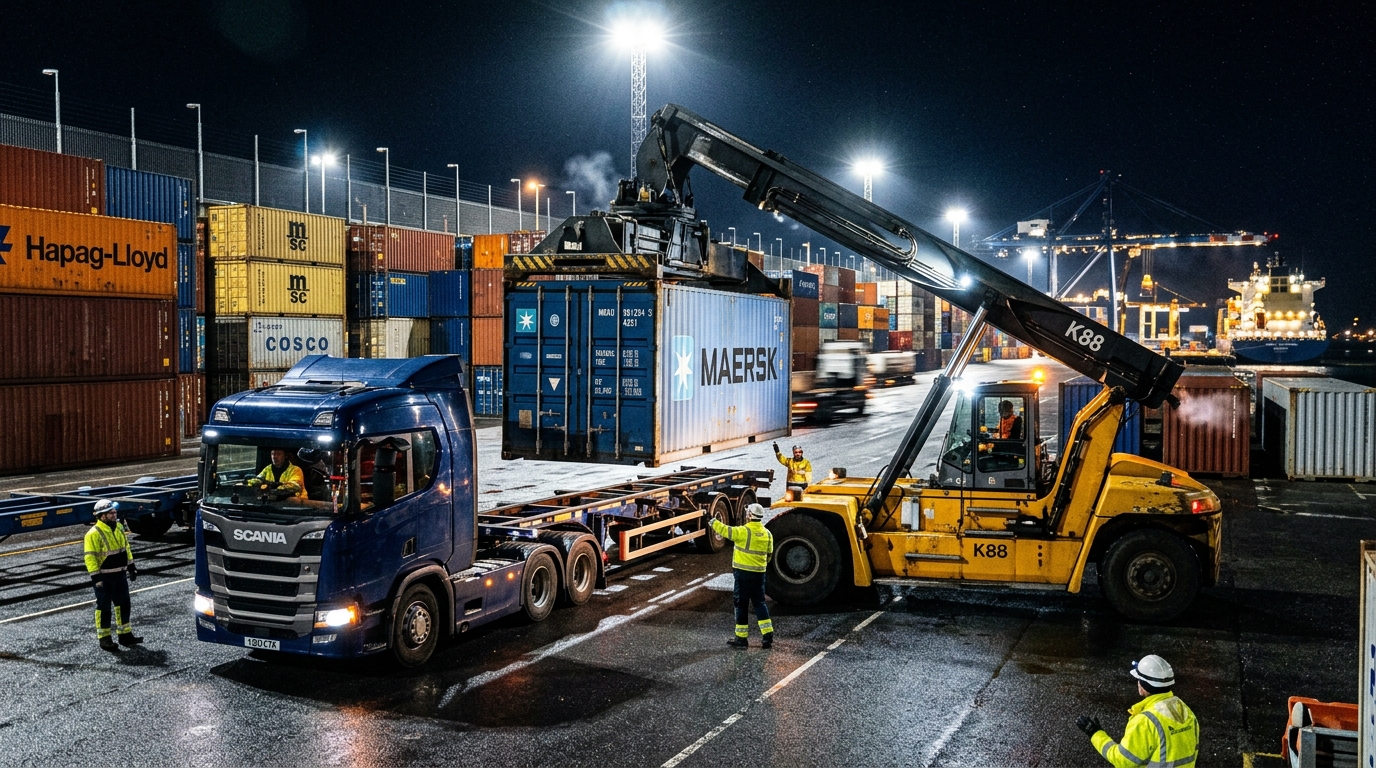
Last Free Day (LFD) Is Today or Tomorrow
The most common driver of same-day urgency is the last free day at the terminal. Every container at POLB has a clock running: once the vessel discharges and the terminal starts counting free days, the importer has a limited window — typically four to seven calendar days depending on the terminal and steamship line tariff — to pick up the container before demurrage begins.
When free days are exhausted and the container hasn’t moved, demurrage charges start. At Port of Long Beach terminals, those charges vary by terminal, steamship line, and container size but start accruing immediately and escalate with each passing day. Even a few days of unclaimed demurrage on a standard 40-foot container can generate substantial charges — and the longer it sits, the steeper the daily rate becomes.
If your LFD is today, you’ve already lost margin. The only question is how many more days’ worth of charges you’ll absorb before the container moves.
Vessel Schedule Changes and Early Arrivals
Container vessels don’t always arrive on schedule. A vessel that arrives two to three days early compresses your entire logistics sequence: customs entry must be filed sooner, ISF has already been filed, but your receiving warehouse may not be ready, your delivery appointment may be set for a date that’s now past free time, and your drayage carrier may not have an appointment slot available on the compressed timeline.
Early arrivals are particularly acute in a high-volume trade lane environment like POLB. When multiple vessels arrive ahead of schedule in the same week, terminal appointment availability can tighten, and every carrier serving that terminal is competing for the same slots.
Delayed Customs Release — Late LFD Arrival
Sometimes the delay isn’t on the logistics side — it’s in customs. A container that clears customs on day six of a seven-day free period leaves you one day to book an appointment, dispatch a driver, and complete the pickup before demurrage starts. If the customs release comes in at 3 p.m. on day six, you may need a carrier dispatched before business hours on day seven.
This is one of the most common scenarios where same-day capability becomes the deciding factor. An asset-based carrier with drivers and equipment ready can execute a next-morning pickup on a same-day dispatch. A broker looking for available capacity cannot guarantee it.
Missed Appointment — Re-booking Under Pressure
If a driver misses a terminal appointment window — due to traffic, mechanical issues, or a congested terminal gate — the appointment is forfeited and a new one must be booked. At busy POLB terminals, the next available appointment may be 24 to 48 hours out. If that delay pushes the container past its last free day, the importer absorbs demurrage that could have been avoided.
Recovering from a missed appointment requires a carrier with enough dispatch flexibility to secure a new slot quickly and prioritize the re-run. This is an operational capability — it depends on having drivers available and terminal relationships, not just a willingness to try.
Production Line or Retail Urgency
Not all same-day requests are driven by demurrage. Some are driven by the downstream demand that makes the cargo urgent in the first place: a production line that needs a specific component, a retailer with a hard floor-date for a promotion, or a DC that has a 48-hour receiving window before the inbound dock schedule closes. In these cases, same-day drayage is about protecting revenue or production commitments, not just avoiding port fees.
How Demurrage Costs Add Up at POLB
Before diving into the mechanics of same-day dispatch, it’s worth understanding the cost structure that makes urgency so critical at Port of Long Beach terminals.
Demurrage is charged by the terminal operator — not the steamship line — for containers that remain at the marine terminal past the applicable free time period. Each POLB terminal publishes its own demurrage tariff, and rates vary by terminal, container size, and cargo type.
Published demurrage rates at major POLB terminals (examples):
- At major POLB terminals for standard 40-foot dry containers, early-tier demurrage charges begin accruing immediately
- Rates escalate in later tiers — by day 10 or beyond, daily charges increase significantly
- Reefer (refrigerated) containers carry substantially higher demurrage rates due to the equipment and power management involved
These rates compound daily. A container that enters demurrage on day five and isn’t picked up until day twelve can generate thousands of dollars in terminal demurrage alone — in addition to any steamship line per diem charges on the container itself.
Steamship line per diem (detention) charges are separate and also accumulate when a container is not returned to the port within the line’s free-day allowance after outgate. Standard per diem rates vary by carrier but also accrue on a tiered daily basis — contact your steamship line for current per diem schedules.
The combined exposure — demurrage and detention — creates a strong financial incentive to move containers as soon as free days are committed and the container is available.
The Pre-Pull Strategy — Pulling Before Your LFD
One of the most effective tools for managing LFD pressure is the pre-pull: picking up the container from the terminal before the last free day, storing it at a carrier yard, and delivering it when the consignee is ready to receive.
How a pre-pull works:
A pre-pull is exactly what it sounds like — the drayage carrier picks up the container from the terminal before it needs to be delivered. Rather than delivering directly to the consignee (who may not have a receiving appointment yet), the container is moved to the carrier’s secure yard or an off-dock storage facility. Demurrage stops accruing the moment the container outgates from the terminal. Detention begins on the steamship line’s container, but depending on the line’s free days and the length of the yard storage, the combined cost is often lower than terminal demurrage.
When a pre-pull makes sense:
- Your consignee isn’t ready to receive, but your LFD is approaching
- Customs has cleared but a delivery appointment isn’t available until the next day or two
- You need insurance against the risk of missing an appointment — having the container in a carrier yard means you control the last-mile timing without terminal demurrage exposure
- Weekend delivery is needed, but the terminal appointment system is backed up for weekend slots
Pre-pull and yard storage at Precision:
Precision Worldwide Logistics owns our yard in La Mirada, CA — approximately 20 minutes from the Port of Long Beach. We can pre-pull containers, stage them at our yard, and deliver on your schedule. If your LFD pressure is today and your consignee can’t receive until tomorrow, a pre-pull eliminates the overnight terminal demurrage exposure.
See our same-day drayage service page for details on pre-pull availability and how to schedule an urgent pre-pull.
Terminal Appointment Systems and Urgent Pickups at POLB
Every POLB terminal operates an appointment system that controls when trucks can enter to pick up or drop off containers. Understanding how these systems work is essential for same-day execution.
How terminal appointments work at POLB:
Most POLB terminals use eModal — a shared appointment management platform — to book import pickup appointments. Carriers log into eModal (or their own TMS integration with eModal) to check container availability, verify hold status, and book appointment slots. Appointment windows are typically 2-hour blocks during operating shifts.
Before a container can be appointed, several conditions must be met:
- The container must be discharged from the vessel and grounded (placed in the terminal yard)
- All customs holds must be cleared and the entry must reflect customs release in CBP’s ACE system
- Any steamship line freight charges must be paid (the line issues a “freight release”)
- Any terminal holds (equipment damage disputes, booking issues) must be resolved
When all conditions are met, the container shows as “available” in eModal and an appointment can be booked.
Appointment availability on a same-day basis:
Appointment availability varies significantly by terminal, day of week, and time of year. In off-peak periods, same-day or next-morning appointments are routinely available. During peak season (typically August through November), appointment slots at some terminals fill 24 to 48 hours in advance, limiting true same-day execution. This is one reason asset-based carriers with high daily appointment volume have an advantage — they often receive priority access or have dedicated slot allocations that smaller carriers can’t access.
What affects appointment availability for urgent moves:
- Time of booking — Appointments are typically released for the next business day in the early morning hours. Carriers who monitor release windows and book immediately after they open have the best chance of securing same-day or next-day slots.
- Terminal congestion — When a terminal is operating near capacity, appointment slots are constrained across the board.
- Dual transactions — Some terminals offer appointment priority for dual-transaction moves (drop off an empty, pick up a live load). Carriers who can execute dual transactions often secure better appointment availability.
- Chassis availability — An appointment is only as good as the chassis to execute it. Carriers who own their chassis don’t wait on chassis pool availability to confirm an appointment.
The Anatomy of a Same-Day Drayage Dispatch
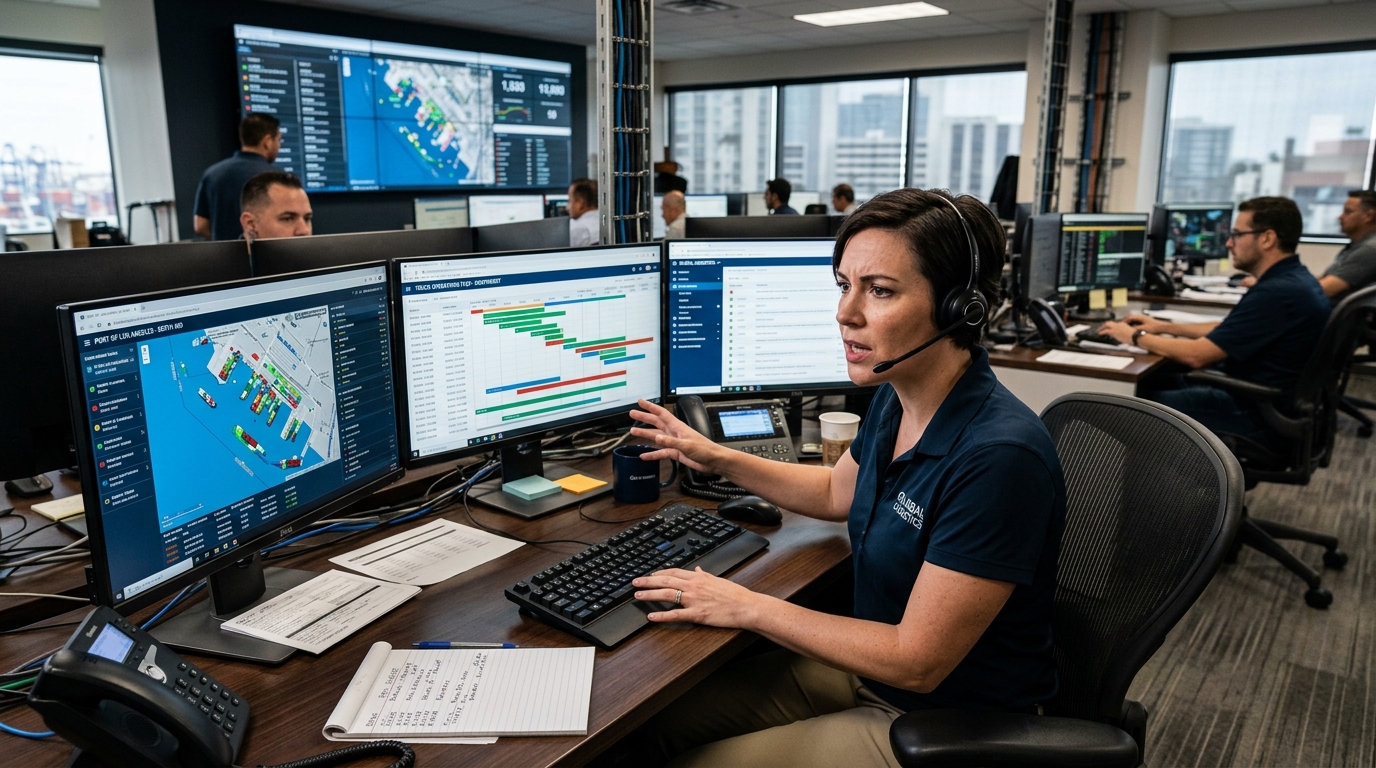
When you call Precision for a same-day pickup at Port of Long Beach, here is what happens from the moment you’re on the phone:
Step 1 — Information Intake (5–10 minutes)
Our dispatch team needs the following information to confirm whether same-day execution is feasible:
- Container number and size (20′, 40′, 45′)
- Terminal location (which POLB terminal — LBCT, TTI, SSA, Pier J, Trapac, etc.)
- Customs release status (confirmed cleared, or ETA on release)
- Steamship line freight release status (confirmed paid, or pending)
- Last free day and current demurrage exposure, if any
- Delivery address and consignee contact for receiving appointment confirmation
- Any special cargo requirements (hazmat, overweight, reefer)
The more of this information you have ready when you call, the faster we can act.
Step 2 — Availability and Appointment Check (10–20 minutes)
Dispatch checks driver and equipment availability for same-day execution, then checks the terminal’s eModal system to verify container availability status and open appointment slots. If the container is available and an appointment slot exists, we confirm and proceed.
If the container shows a hold (customs, steamship line freight, or terminal), we identify the hold type, communicate it back to you, and — if the hold is expected to clear within hours — stage the dispatch to move the moment the hold clears.
Step 3 — Appointment Booking and Driver Dispatch
Once the appointment is confirmed, we assign the driver, confirm equipment (chassis type if applicable — standard, triaxle, or other), and dispatch. For a container that is clean and available, a call at 9 a.m. can result in a driver at the terminal gate by early afternoon.
Step 4 — Terminal Gate Processing
The driver presents at the terminal gate with the appointment number, container number, and required credentials (TWIC card for secure port access). Gate processing at POLB terminals typically takes 15 to 45 minutes depending on congestion. The driver receives the container, secures it, and departs for the delivery destination.
Step 5 — Delivery and Empty Return
The driver delivers to the consignee, receives a signed POD (proof of delivery), and returns the empty container to the designated terminal or depot within the steamship line’s free period to avoid per diem charges. For same-day deliveries, proper empty return coordination is essential to preventing detention charges after the move.
Why Asset-Based Carriers Respond Faster Than Brokers for Urgent Moves
When a container needs to move today, the distinction between an asset-based carrier and a freight broker matters in ways that don’t apply to standard planned moves.
A freight broker doesn’t own trucks, chassis, or a yard. When you call a broker for a same-day pickup, the broker calls their network of carriers to find one with availability. During peak periods — or when multiple urgent requests are competing for the same limited driver pool — that search takes time. The broker also can’t guarantee the equipment quality, driver credentials, or operational familiarity with the specific terminal.
An asset-based carrier like Precision controls its own resources:
- Own trucks — No waiting on third-party driver availability. Our dispatch knows exactly which drivers are available and where they are.
- Own chassis — We don’t depend on chassis pools, which can run short at peak periods. Our chassis fleet is maintained, compliant, and available.
- Own yard — We can stage a pre-pull or hold a container between terminal pickup and delivery without relying on third-party storage. La Mirada, CA, puts us 20 minutes from every major POLB terminal.
- TWIC-cleared drivers — Every Precision driver holds a Transportation Worker Identification Credential. There’s no credentialing delay at the terminal gate.
- 35 years at the port — Our team knows the terminals, the appointment systems, the gate procedures, and the fastest routes between the port and Southern California distribution points.
The operational difference is most visible in the first 30 minutes after you call. An asset-based carrier gives you an answer about feasibility immediately. A broker gives you a callback.
Weekend and After-Hours Drayage at POLB
The port doesn’t stop on weekends, and neither does demurrage. Most POLB terminals offer Saturday operations, and some operate Sunday as well — though appointment availability and operating hours vary by terminal and are subject to change based on labor agreements and vessel schedules.
Weekend considerations:
- Not all terminals operate full weekend hours. LBCT, TTI, and SSA Terminals at POLB have historically offered weekend appointment windows, but hours and availability change seasonally and with labor conditions. Confirm operating hours before assuming weekend availability.
- Weekend appointment slots are more limited than weekday slots. Booking early in the week for a Friday or Saturday appointment is advisable.
- Chassis pool availability is more constrained on weekends — another advantage of working with a carrier who owns their equipment.
- CFS and warehouse receiving hours vary. Confirm your consignee can receive on the day you’re dispatching before committing to a weekend delivery.
After-hours drayage:
After-hours pickups (outside standard gate hours) are possible at terminals that offer extended shifts. Some POLB terminals operate second-shift gates into the evening during peak periods. When after-hours availability exists, asset-based carriers with evening-shift drivers can execute. This requires advance coordination — after-hours dispatch is not walk-up capacity.
For weekend or after-hours same-day drayage inquiries, call Precision at (714) 690-9344 as early as possible. We’ll confirm terminal availability for your specific pickup and advise on the fastest execution path.
What to Have Ready When You Call for Same-Day Drayage
Every minute you spend gathering information after you call is a minute of dispatch delay. Have the following ready before you pick up the phone:
Required for same-day dispatch:
- Container number(s) — including steamship line prefix and full container ID
- Terminal name and specific terminal at Port of Long Beach
- Last free day (LFD) and today’s date relative to it
- Confirmation of customs release (is the entry green in ACE?)
- Steamship line freight release status (paid and released?)
- Delivery address with ZIP code and consignee name
- Consignee receiving hours and any appointment requirements at the delivery site
- Any cargo special requirements: hazmat class, overweight flag, reefer temperature settings
Helpful but not always immediately required:
- Bill of lading number and steamship line name
- Your company’s account information or reference number
- Chassis preference (if your steamship line requires a specific chassis type)
The difference between a caller who has all of this information ready and one who has to look it up mid-call is often 15 to 30 minutes of dispatch time — which at 2 p.m. on a day when terminal appointments close at 4 p.m. is the difference between a same-day move and a next-morning pre-pull.
Same-Day Drayage From Port of Long Beach — Precision Worldwide Logistics
Precision Worldwide Logistics, Inc. is an asset-based drayage carrier based in La Mirada, CA — approximately 20 minutes from the Port of Long Beach. We own our trucks, chassis, and yard. All drivers are TWIC-cleared. We’ve operated in the Long Beach and Los Angeles port market for 35 years.
When your container can’t wait for tomorrow, we’re the call to make.
For more details about our urgent drayage capabilities, visit our same-day drayage at Long Beach service page. For a full overview of our port services, see our Long Beach drayage hub.
Call (714) 690-9344 — have your container number and terminal ready, and we’ll tell you immediately whether same-day execution is feasible.
Frequently Asked Questions
Can you really pick up a container the same day I call at Port of Long Beach?
Yes — subject to container availability, terminal appointment slot availability, and dispatch timing. For calls received before noon at a terminal with same-day appointment availability, a same-day pickup is typically feasible when the container is cleared and available. Calls received in the afternoon may be better served by a next-morning pre-pull, depending on how many appointment windows remain for the day at the specific terminal. The first step is a phone call — we assess feasibility in real time based on current terminal conditions. Call (714) 690-9344.
What is a pre-pull and when should I use it for a POLB container?
A pre-pull means your drayage carrier picks up the container from the terminal before your delivery appointment is ready, stores it at a secure yard, and delivers on your schedule. A pre-pull makes sense when your last free day is approaching but your consignee isn’t ready to receive, or when you want to eliminate overnight demurrage exposure. Once the container is pulled from the terminal, terminal demurrage stops. You may accrue steamship line per diem on the container while it’s in the yard, but depending on the carrier’s free time and the duration of storage, the net cost is often lower than remaining in terminal. Precision owns our yard in La Mirada, CA, and can stage pre-pulled containers for same-day or next-day delivery.
How do terminal appointment systems affect same-day drayage at Long Beach?
All POLB terminals use appointment-based gate systems. Before a container can be picked up, the carrier must book an appointment window through eModal or the terminal’s portal. During off-peak periods, same-day appointment slots are commonly available. During peak season (late summer through fall), slots can fill 24 to 48 hours in advance at some terminals, limiting true same-day execution. Asset-based carriers with consistent daily volume often have better access to available slots than spot-market brokers. Confirming appointment availability is one of the first things we check when you call for a same-day pickup.
What information do I need ready when I call for same-day drayage?
At minimum: your container number, the specific terminal at Port of Long Beach, your last free day, confirmation of customs release, steamship line freight release status, and your delivery address. The faster you can provide this information, the faster we can confirm feasibility and dispatch. A caller who has all of this ready can have a driver dispatched significantly faster than one who needs to gather information mid-call.
Why use an asset-based carrier instead of a freight broker for urgent drayage?
An asset-based carrier owns its trucks, chassis, and yard — which means dispatch is an operational decision, not a sourcing exercise. When you call Precision, we know immediately which drivers are available, where the chassis are, and whether we can make same-day execution work. A freight broker has to call their network of carriers to find capacity, which takes time and introduces uncertainty about equipment quality and driver credentials. For planned moves with flexible timing, a broker can work. For same-day urgency, asset-based is faster and more reliable.
Precision Worldwide Logistics, Inc. | La Mirada, CA | (714) 690-9344
Asset-based drayage from Port of Long Beach — TWIC-cleared drivers, own trucks and chassis, own yard, 35 years at the port.