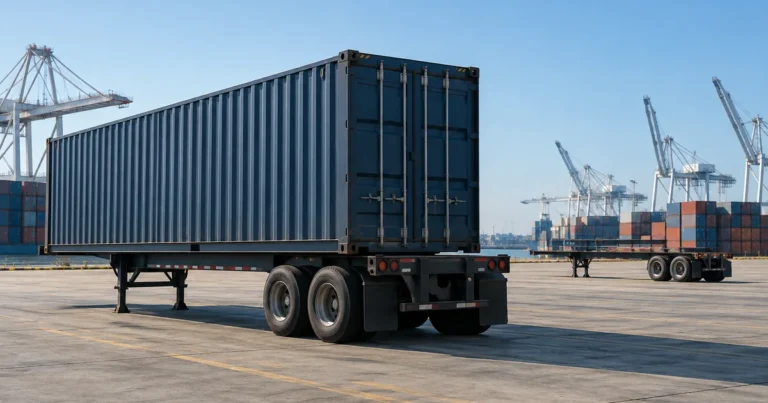

Your first container at the Port of Long Beach needs six coordinated steps: arrival planning, releases, a terminal appointment, pickup, warehouse delivery and empty return. Direct drayage moves the loaded ocean container to your receiving site without transferring the cargo into another trailer along the way. Plan the return as carefully as the pickup: unloading does not finish the equipment rental.
This guide explains that intact-container journey. Precision’s Long Beach drayage services support port-to-receiver moves; the terminal drayage guide covers terminal-specific planning.
Before arrival, assign the paperwork and the people
Name a customs broker, a drayage carrier and a warehouse receiving contact before the shipment becomes urgent. Check your purchase and transport arrangements to establish who books the truck, pays the charges and gives delivery instructions. Do not assume the ocean booking includes warehouse delivery.
Share the bill of lading, container number, ocean line, estimated vessel arrival, terminal, cargo description, weight and delivery address. Flag refrigerated, hazardous or unusually heavy cargo before a carrier accepts the move. Confirm that the receiving site can handle the container and unload the cargo safely.
Importer Security Filing, or ISF, is separate from the customs entry. For a standard containerized ocean import, CBP requires eight ISF data elements no later than 24 hours before loading aboard the vessel at the foreign port. Container stuffing location and consolidator information are due as early as possible, but no later than 24 hours before arrival at a U.S. port.
That is a pre-loading obligation, not something to start when the arrival notice lands. Ask your broker or authorized filer to confirm submission and any required updates. Filing ISF does not itself provide customs release.
CBP’s ISF filing guidance distinguishes bulk cargo, which is exempt, from qualifying exempt break-bulk cargo, whose ISF is due 24 hours before arrival. Those exceptions do not turn an ordinary container shipment into an arrival-time filing.
Step 1: Read the arrival notice, then verify availability
An arrival notice provides shipment information for destination planning. It is not proof that your container has been unloaded or is ready for a truck. Vessel arrival, container discharge, pickup availability and the last free day are different facts.
Have the dispatcher check the actual container record in the terminal’s current system. Record its location, availability, holds and displayed last free day. Keep checking as the vessel schedule and cargo status change.
The last free day is the final day of the applicable terminal free-time period before charges may apply. Do not calculate it from a general “four days at Long Beach” rule. The terminal, ocean line, equipment type and shipment terms can affect the calculation.
Ask which date governs terminal storage and which governs the ocean carrier’s equipment allowance. A customs hold or appointment problem does not automatically extend either deadline. Save the displayed dates and ask the billing party to clarify any conflict before dispatch.
Step 2: Confirm customs, carrier and terminal releases separately
Customs release is only one part of pickup readiness. Your broker handles the customs entry and coordinates responses to customs or other government-agency requirements. A CBP release does not remove an ocean carrier’s freight or document hold.
The ocean line may require payment, the appropriate bill-of-lading release and delivery instructions before it authorizes collection. Requirements depend on the shipment and transport document. Use the line’s release process rather than assuming a payment receipt is the final release.
Before sending the truck, the dispatcher should verify:
- The container is discharged and available for the intended pickup.
- Required government releases are in place.
- Ocean carrier release is complete.
- Terminal holds and applicable payment requirements are resolved.
- The intended gate transaction is permitted and booked where required.
A container directed to an authorized examination or in-bond movement may follow a different controlled process. It is not ready for ordinary delivery to your warehouse simply because a truck can move it somewhere.
Step 3: Coordinate the terminal slot, chassis and receiving window
A terminal appointment reserves a transaction window under that terminal’s rules. It is not a substitute for release, equipment availability or a warehouse appointment.
Use the terminal’s current booking instructions. PierPass’s appointment directory links to member terminal systems. Long Beach Container Terminal also publishes gate operating hours. Check the actual transaction and shift rather than treating a terminal’s general opening time as the pickup cutoff.
Planning and booking can sometimes begin before every release is complete, depending on the system. The important distinction is to confirm pickup eligibility before dispatch, not to impose a universal “release first, then book” rule.
The carrier also needs a suitable chassis, the wheeled frame supporting the container on the road. Ask who supplies it, where it will be collected, whether a separate trip is needed and where it must be returned. Chassis arrangements are not identical for every ocean line or terminal.
Match the terminal slot to your receiving site’s opening hours and unloading capacity. A pickup that works at the gate but misses the warehouse appointment can create waiting, storage or another delivery attempt.
Step 4: Check the gate-out record at pickup
On pickup day, dispatch should recheck availability, holds, the appointment and gate notices. A status checked yesterday may not describe the container today.
The driver collects the container under the terminal’s procedures. Keep the equipment interchange receipt, often called an EIR, or equivalent gate record. Check container and chassis identifiers, the interchange time, recorded condition and any seal information against the shipment documents.
Report visible damage or a seal discrepancy promptly under the parties’ procedures. Do not describe direct drayage as a guarantee that nobody has opened the container. Customs examinations or other authorized activity may involve inspection and resealing.
A dual transaction combines a permitted empty return with an import pickup. It depends on compatible equipment, appointments and the terminal’s acceptance rules. It is not an automatic option for every truck visit.
Gate-out is an important milestone, but not proof that every charge has ended. Terminal storage, ocean equipment use and chassis rental have separate terms and records.
Step 5: Deliver the intact container and document unloading
In this workflow, the cargo stays in the ocean container during the road move to your receiving site. There is no intermediate cargo transfer into a domestic trailer.
Confirm whether the delivery is a live unload or a drop. With a live unload, the driver waits while the receiver unloads. With a drop, the container and supporting equipment are left at an approved site for later unloading and collection.
Before agreeing to a drop, confirm site access, safe placement, equipment availability, collection arrangements and the extra rental time. Do not assume a drop is available simply because the warehouse prefers it.
Have the receiving team check the container and seal information, record exceptions and provide delivery paperwork. Tell dispatch when unloading finishes and the equipment is ready for collection. An unloaded container that nobody has released for return can still create avoidable rental days.
Direct drayage fits a receiver able to accept the ocean container. Transloading transfers the cargo at another facility for onward transport, sometimes with sorting or repalletizing. If that is the required route, use the separate transloading process guide; it is not an extra step in this direct-delivery workflow.
Step 6: Obtain an accepted empty return and close each rental
For a carrier-owned container, follow the ocean line’s current return instructions. The authorized location may be a terminal or depot and need not be the pickup terminal.
Recheck instructions before the return trip. The destination must accept the line, container size and equipment type for the intended shift and transaction. An appointment may also be required.
LBCT’s empty restrictions show why this matters: acceptance varies by line, equipment and shift, and some returns require a dual transaction. Do not send a driver to an arbitrary depot because another location is closed.
Keep the accepted return receipt or EIR. A rejected return attempt is not a completed interchange. If no authorized return option is available, save the instructions, appointment attempts and communications, and seek written direction from the ocean line.
Close out the chassis separately under its provider’s terms. Returning the container does not necessarily return the chassis or end its rental. The two pieces of equipment can have different return locations and completion times.
Compare the full move, not just the trucking rate
Demurrage generally concerns cargo or equipment remaining at the terminal beyond applicable free time. Detention generally concerns the ocean container outside the terminal beyond its allowance. Chassis rental is separate, and “per diem” can describe different daily equipment charges. Your agreements may use different labels.
Use the demurrage and detention charges guide to identify the billing party and charge basis. Avoid assuming all three clocks start together or run only on business days.
Ask a drayage provider to separate the base move from fuel, chassis use, extra equipment trips, waiting, pre-pull or storage, redelivery and empty-return work where applicable. Confirm what the quote includes and what triggers an additional charge.
Evaluate communication as well as price. Who checks releases and free time? Who reports an unavailable appointment? Can you obtain gate records and delivery confirmation? A shared status record helps only if someone owns the next action.
Frequently asked questions
How long does a first container pickup take?
There is no fixed interval from vessel arrival to warehouse delivery. Discharge, availability, government and carrier releases, appointments, chassis supply and warehouse receiving all affect the schedule. Ask your dispatcher for the current constraint and next action rather than treating the vessel’s arrival date as a confirmed delivery date.
Does customs release mean my container can leave?
Not by itself. Your container must also satisfy ocean carrier and terminal requirements and be available for the intended gate transaction. A freight hold, document issue or terminal restriction can still prevent ordinary delivery. Ask your broker about government release and your dispatcher to confirm the remaining pickup conditions.
Can I return the empty to any terminal?
No. Follow the ocean line’s current authorized return instructions and confirm the receiving location accepts your equipment for the intended shift. Some returns need an appointment or a compatible dual transaction. Keep the accepted return record, then confirm the chassis has also been returned under its separate rental terms.
Is ISF due before loading or before arrival?
For a standard containerized import, eight ISF data elements are due no later than 24 hours before loading at the foreign port. Stuffing location and consolidator information have a later permitted deadline. Bulk and qualifying exempt break-bulk cargo have different rules, so have your authorized filer confirm the applicable requirements.
For a drayage quote request, provide the container size, weight, ocean line, terminal, arrival estimate, delivery address and expected monthly container volume. Include known holds, displayed deadlines and unloading arrangements so the pickup, delivery and return can be planned together.