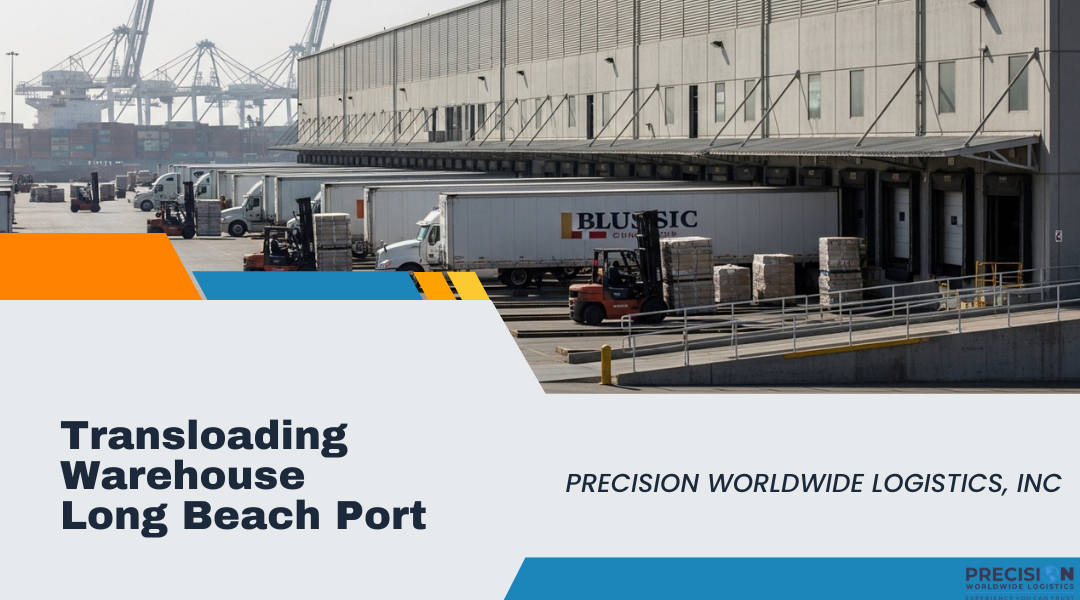
Choosing the right transloading warehouse near the Port of Long Beach can determine how efficiently your cargo moves from ship to shelf. The Long Beach gateway handles millions of containers each year, so proximity, coordination, and compliance all play a major role in reducing costs and delays. You should look for a facility that combines near-port access, bonded capabilities, and integrated drayage to keep freight moving without unnecessary downtime.
Every minute counts when managing imports under tight delivery windows. A well-positioned transload operation near the port can minimize drayage distance, avoid demurrage fees, and balance quick-turn loads with longer-term storage. Understanding how port constraints—like weight limits and traffic regulations—affect warehouse efficiency helps you make informed choices about capacity, scheduling, and service flexibility.
Since 1995, Precision Worldwide Logistics has built its reputation on control, reliability, and performance. Located in La Mirada, the company connects near-port speed with nationwide reach, offering transloading, drayage, warehousing, and transportation under one accountable network. With this foundation, you can expect insight into what drives throughput, reduces risk, and improves overall supply chain results.
Import Contexts That Require Transloading Proximity
Proximity to the Port of Long Beach matters most when your shipments rely on quick container turnover, regulatory compliance, and optimized inland distribution. The closer your transloading warehouse is to the terminal, the easier it becomes to manage throughput, avoid demurrage, and gain flexibility in reconfiguring freight for different destinations.
Containerized Imports With Inland Distribution Needs
If your imports move inland after arriving at the Port of Long Beach, you benefit from transloading near the port. Transferring goods from maritime containers to domestic trailers (FTL) allows you to meet state weight limits and reduce drayage travel. For instance, a 40‑foot ocean container can often be converted into part of a 53‑foot trailer load, lowering total trips needed for regional and national delivery.
Port‑side facilities also help you release shipping containers faster, avoiding detention and demurrage fees. Most providers located within a few miles of the terminals return empty containers to carriers the same day. Once your cargo is restuffed into domestic equipment, you can route it by truck or rail to distant markets without delay.
With container volumes continuing to rise through Long Beach, these near‑port setups help prevent congestion. A good transloading provider often coordinates customs brokerage and drayage scheduling so your goods clear paperwork and inspection while the physical transfer occurs.
SKU Mixing, Palletization, And Reconfiguration Triggers
You often need transloading proximity when each inbound container carries mixed SKUs or unpalletized cargo. Near‑port warehouses can sort, label, and re‑palletize goods to match your distribution center requirements. This process reduces handling at inland facilities and ensures standardized loads for retailers or fulfillment centers.
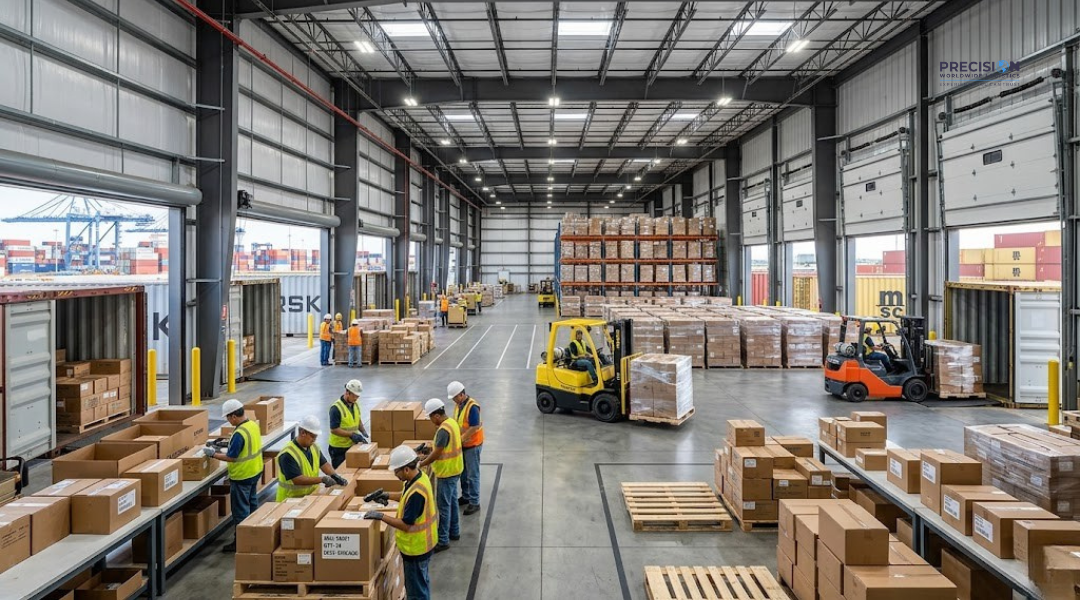
Many importers use nearby sites to merge loads from multiple vendors into single outbound trailers. A brief palletization and labeling stage near the port also identifies cargo damage early, well before it travels further inland.
Providers offering cross‑docking and short‑term storage help you stage inventory until orders finalize. Because these services happen close to the port, you avoid double handling and maintain shorter cycle times for regional distribution.
When Direct Port‑To‑Destination Bypass Is Viable
Sometimes, direct hauling from port to destination works better than stopping at a transload site. This depends on shipment type, distance, and urgency. If your containers move full to a single facility within drayage range, bypassing a warehouse might save time.
For example, large bulk shipments or consistent full‑truckload volumes may not need repacking. However, you must confirm that routes allow container returns within carrier time limits. Otherwise, holding equipment inland can quickly generate penalties.
Evaluate bypass viability by comparing cost per mile for inland drayage versus FTL transfer rates near the port. When you factor in customs clearance timing, local fuel consumption, and turn‑time efficiency, direct moves sometimes compete—but often, near‑port transloading still gives more control over your supply chain.
Port Of Long Beach Constraints Shaping Warehouse Selection
Warehouses serving the Port of Long Beach must operate within strict logistical, regulatory, and physical limits. You face challenges tied to terminal congestion, chassis shortages, and the cost impact of every added mile between your facility and the port gate. Strategic selection can reduce time in transit, prevent demurrage, and keep your operations compliant with drayage and appointment restrictions.
Terminal Congestion And Appointment Scheduling Limits
Cargo flow at the Port of Long Beach often slows due to terminal congestion and restricted appointment systems. Container terminals require drivers to book entry slots, and missed or unavailable slots can delay pickup by hours or even a full day. The situation worsens at peak import seasons when terminals hit full capacity.
You should evaluate warehouses that actively monitor appointment systems and coordinate directly with drayage carriers. Facilities that track vessel arrivals and integrate with terminal APIs help ensure drivers can reserve time windows before capacity fills. Some operators offer 24/7 gate coordination or in-house dispatch to manage same-day adjustments.
Flexible scheduling reduces yard congestion and helps you avoid demurrage fees. When selecting a warehouse, look for one that supports rapid load confirmation and has experience working with both the Port of Long Beach and the Port of Los Angeles terminals, where appointment rules can differ slightly by operator.
Drayage Turn Times And Chassis Availability Pressures
Drayage carriers depend on efficient turn times to meet delivery schedules and maintain profitability. At the Long Beach port, chassis shortages, equipment imbalances, and empty container return restrictions can create unpredictable waits. When these conditions persist, your containers can stay idle, delaying final delivery.
A warehouse with a nearby secured chassis pool, on-site drop lots, and strong carrier relationships can ease this pressure. Ask whether the site supports dual transactions, allowing drivers to drop an empty and pick up a loaded container in one trip. This small detail often cuts drayage time in half and lowers fuel expense.
Facilities offering live visibility dashboards or EDI connections with drayage providers let you track route performance and time at terminal gates. Real-time data allows you to adjust schedules and prevent detention charges when congestion spikes.
Distance-To-Port Effects On Dwell Time And Costs
Proximity to the Port of Long Beach directly affects transportation cost and cargo velocity. Even a few extra miles can add notable drayage expense, especially under California’s emissions and truck hour limits. Longer routes mean more fuel, more waiting, and higher driver pay rates.
You should analyze the tradeoff between rental rates and proximity. A warehouse three miles from the port might charge more per square foot but reduce drayage roundtrips enough to offset rent. Facilities within five miles typically deliver containers faster and minimize chassis rental periods.
Some logistics providers operate across both ports of Los Angeles and Long Beach, using shared drayage fleets to balance loads between gateways. Choosing a location close to major inland distribution corridors like I-710 or I-405 also shortens outbound transit and improves trailer utilization.
Facility Capabilities And Operational Design Differences
Efficient warehousing near the Port of Long Beach depends on how well a facility matches its design to your freight needs. Layout, equipment, and staffing models can greatly affect how quickly goods move through cross-docks, repack lines, or temporary storage zones.
Cross-Dock Speed Versus Storage-Oriented Configurations
A cross-dock facility focuses on rapid transfer. Freight moves from inbound containers to outbound trailers within hours. You often see high dock door counts, wide staging aisles, and space optimized for deconsolidation, pallet breakdown, and pick and pack tasks. These layouts favor importers needing same-day drayage and outbound shipping to regional distribution centers.
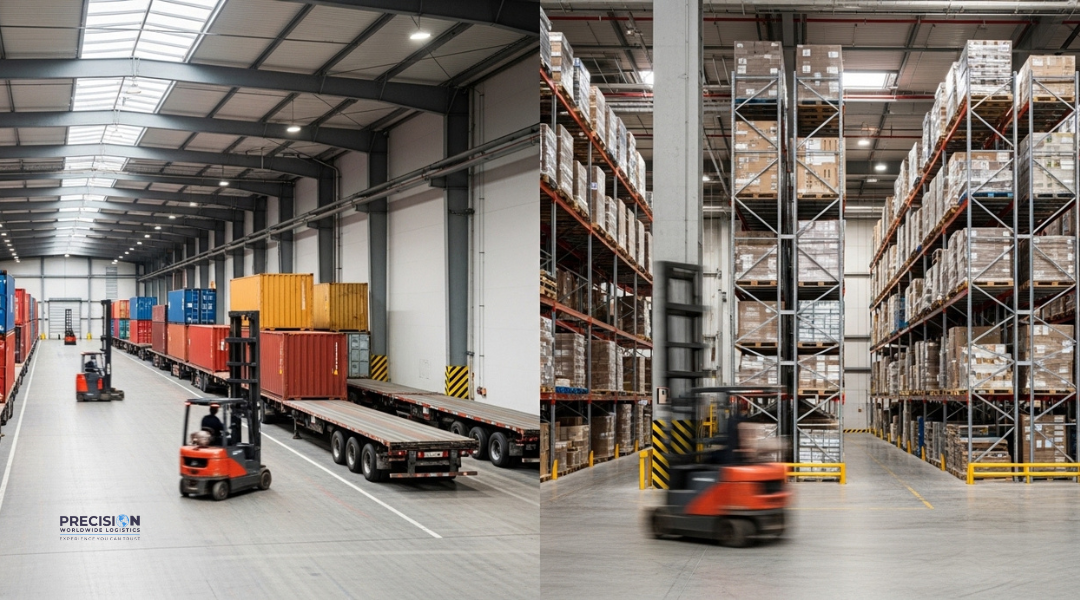
A storage-oriented warehouse, by contrast, supports longer dwell times. You may find racked storage, tighter aisles, and climate-controlled zones for temperature-sensitive or bulk goods. In Long Beach, near-port operations often blend both modes—fast-turn cross-docking paired with limited holding areas to manage customs delays or retail scheduling windows.
Deciding which layout fits your operation depends on your average dwell time, handling requirements, and how much value-added service—such as labeling or repack—you expect from the site.
Dock Door Ratios, Yard Space, And Trailer Staging
Your facility’s dock-to-square-foot ratio is one of the most important performance indicators. A higher ratio supports faster throughput during peak season. Facilities supporting transloading and devanning at the Port of Long Beach often feature 1 dock door per 5,000–7,000 square feet, allowing flexible inbound and outbound traffic.
Ample yard space ensures efficient container turns. You want room for drop trailers, drayage equipment, and reefer plug-ins when handling temperature-controlled cargo. Sites on the Long Beach heavyweight corridor are often built with reinforced pavement and secure perimeter fencing to handle high-weight containers.
Trailer staging areas also matter. Too little space can cause congestion that delays appointment windows. A well-organized yard reduces detention costs and supports off-peak port gate operations.
Labor Models And Throughput Consistency Under Volume
Labor strategy plays a direct role in how consistently your freight moves. Facilities using a hybrid staffing model—a mix of full-time teams and flexible labor—maintain steadier performance when container volumes fluctuate. You should confirm whether a warehouse uses in-house crews for cross-docking and pallet breakdown or relies on third-party labor contractors.
Technology integration improves labor efficiency. Many Long Beach warehouses use warehouse management systems (WMS) linked to EDI for live data exchange, ensuring inventory accuracy during high-volume surges. Standardized handling zones, clear labeling protocols, and consistent shift scheduling all keep throughput stable even during congestion.
Reliable labor planning prevents slowdowns and maintains predictable transit times from pier to outbound distribution. When evaluating a transloading partner, confirm that their staffing levels align with your forecasted peaks and that supervision quality supports accuracy and safety.
Precision Worldwide Logistics View On Throughput And Coordination
Maintaining efficient cargo throughput depends on tight coordination between drayage, transloading, and over-the-road (OTR) transport. You need systems that link equipment availability, container timing, and load planning under a single point of accountability to keep freight moving without idle time or misplaced shipments.
Asset-Based Drayage Alignment With Warehouse Scheduling
You gain reliability when the same operator controls both drayage and warehouse operations. Precision Worldwide Logistics uses an asset-based model that connects its own trucks, chassis, and yard equipment with internal warehouse scheduling software. This setup lets dispatchers assign drivers based on live dock slot data rather than static schedules.
When inbound containers arrive, drivers coordinate directly with warehouse staff to reduce wait time and demurrage charges. A shared digital platform shows truck status, yard positions, and expected offload windows. With these updates, you can adjust your inbound plan without guessing when a container will be ready.
The goal is to manage transportation flow and storage space as a single system. By linking drayage appointments with warehouse receiving, you keep throughput predictable even when port traffic slows or surges unexpectedly.
Transloading Flow Control During Peak Container Surges
During seasonal or port congestion peaks, throughput can drop fast if container flow overpowers available warehouse space or dock time. Precision manages this risk through structured load balancing and short-term yard staging. Containers enter a controlled queue based on cargo type, delivery deadlines, and unload complexity.
You benefit from clear priorities. For example, fast-turn freight destined for regional retail often bypasses extended storage, while slower-moving shipments wait in yard allocations tracked digitally. This tiered approach smooths spikes without overloading dock labor or compromising safety.
The company’s approach keeps visibility high through real-time dashboards and radio frequency (RF) updates. You can view where each container sits, which line it belongs to, and how it ties into outbound truck schedules. Transparent data lets you plan better and minimize detention costs during peak periods.
Integration Between Yard Management And OTR Dispatch
Precision links its yard management system (YMS) with over-the-road dispatch tools to maintain continuous movement from port to final destination. Once a container clears transloading, dispatch teams push routing details directly into the driver application, reducing manual steps and error risk.
This level of integration gives you a single point of accountability. Each container has a consistent data trail from unloading through OTR delivery confirmation. Drivers receive updated delivery times, drop locations, and documentation electronically, helping prevent confusion and phone-based coordination delays.
You can also monitor performance metrics such as dwell time, truck utilization, and loading efficiency. When yard and dispatch teams work within one network, your transportation capacity stays balanced, wait times shrink, and downstream carriers stay informed. That alignment supports predictable throughput across your entire logistics chain.
Cost Exposure, Risk Distribution, And Performance Tradeoffs
Operating a transloading warehouse near the Port of Long Beach involves balancing cost control, risk management, and operational performance. You weigh how proximity to the port affects demurrage exposure, how handling volume influences damage or labor costs, and how provider models shape flexibility and consistency.
Demurrage And Detention Risks Versus Warehouse Proximity
Distance from the port directly affects your exposure to demurrage and detention. The longer a container stays on terminal property, the higher your daily penalties. Near-port facilities shorten container dwell time, often allowing same-day drayage and return of empty containers within the free-time window.
If your operation uses an inland warehouse 50–200 miles away, delays can add hundreds of dollars per container in fees. A warehouse within 10 miles may save $400–$1,100 in drayage and often eliminate per diem charges entirely.
However, these advantages depend on coordination with steamship lines, chassis availability, and terminal appointment systems. When you manage those efficiently, you reduce cost exposure and improve overall asset utilization.
Handling Frequency Impacts On Damage And Labor Costs
Every additional handling step creates a chance for product damage or inventory error. Transloading near the port usually requires fewer total touches compared to traditional long-term storage because goods move through quickly rather than sitting for weeks.
Still, certain operations—like pallet reconfiguration, labeling, or mixed-container sorting—add handling labor. These costs can climb when products require special packaging or inspection. To control risk, you should verify that the facility uses trained forklift operators, rack-stored systems, and standardized damage reporting processes.
A basic cost comparison helps clarify tradeoffs:
| Factor | Near-Port Transload | Inland Warehouse |
|---|---|---|
| Handling touches | 2–3 | 4–6 |
| Damage rate | <0.5% | 1–2% |
| Labor cost per pallet | $7–$12 | $10–$18 |
Lower handling frequency not only cuts labor hours but also reduces claim rates and return processing.
Speed, Flexibility, And Control Tradeoffs Across Providers
Near-port transload providers emphasize speed and throughput, often unloading containers within 24–48 hours of arrival. This rapid cycle improves cash flow and shortens order fulfillment times. Yet, it may limit how much long-term control you maintain over inventory since cargo moves fast and storage is minimal.
Full-service 3PLs farther inland provide more control, offering extended storage and more customized value-added services. The tradeoff is slower turnaround and higher carrying costs.
When evaluating providers, look at metrics such as:
- Average dwell time per container (hours)
- On-time outbound shipment rate (%)
- Inventory visibility platform access
A near-port facility works best when your supply chain values speed and reduced fees, while inland distribution centers fit when your operations need long-term management and coordination across multiple channels.